
Best BWP Plywood for Modular Kitchens in Kathmandu’s Monsoon Climate
Kathmandu’s monsoon is a different kind of test for a kitchen. It’s not just rain outside. It’s weeks of trapped indoor humidity, steam from daily cooking, and the occasional spill that sits on a cabinet base a little too long. Modular kitchens look great on installation day, but the plywood underneath is what decides whether those shutters and cabinets are still holding up three monsoons later.
This is where BWP plywood comes in and why picking the right grade matters more in Kathmandu than in drier climates.
What BWP Plywood Actually Means
BWP stands for Boiling Water Proof. It’s the highest grade of water resistance that plywood can be rated for, tested by boiling the sheet and checking that the layers don’t separate or weaken. This is different from BWR, or boiling water resistant, which offers a lower level of protection.
For a modular kitchen, BWP grade is the standard to look for, especially near the sink, stove, and any cabinet base exposed to daily moisture.
Why Kathmandu’s Monsoon Climate Changes the Requirements
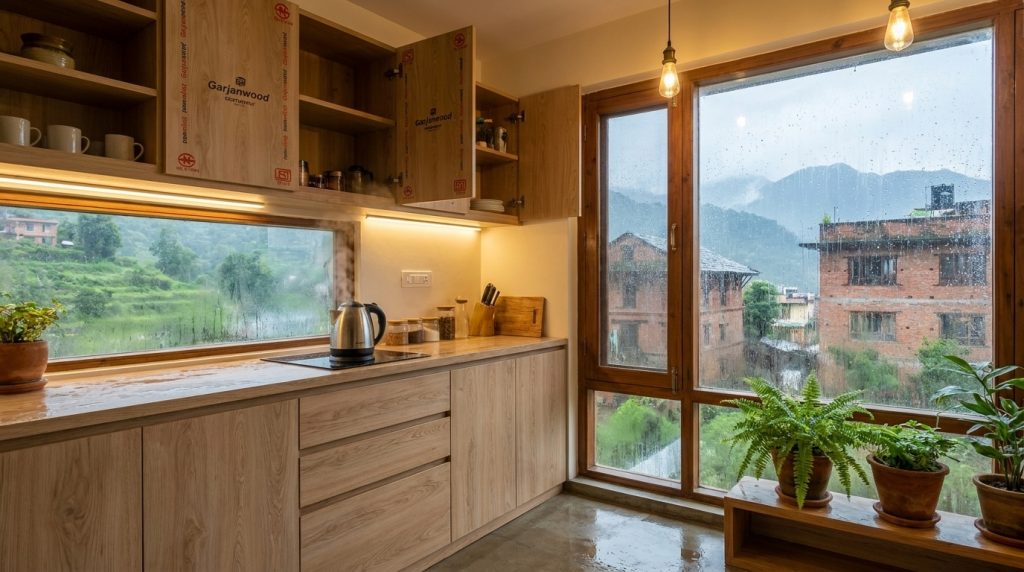
Kathmandu Valley traps humidity differently from the open plains. The surrounding hills slow down air circulation, so once moisture builds up indoors during monsoon months, it lingers. Add a kitchen’s daily steam and water use into that mix, and you get one of the toughest environments for plywood anywhere in the country.
Cabinets made with lower-grade plywood tend to show early signs of trouble in this climate:
- Shutters that swell slightly and stop closing smoothly
- A faint musty smell is building up inside the cabinets
- Laminate or veneer starting to lift at the edges
- Soft or spongy spots near the sink cabinet base
None of this happens overnight. It builds up over a monsoon season or two, which is exactly why the plywood grade matters more than the finish or design when you’re planning a modular kitchen here.
What to Look For When Choosing Plywood for Your Kitchen
- BWP certification, not just BWR. Ask specifically for boiling water-proof grade, especially for base cabinets and sink units.
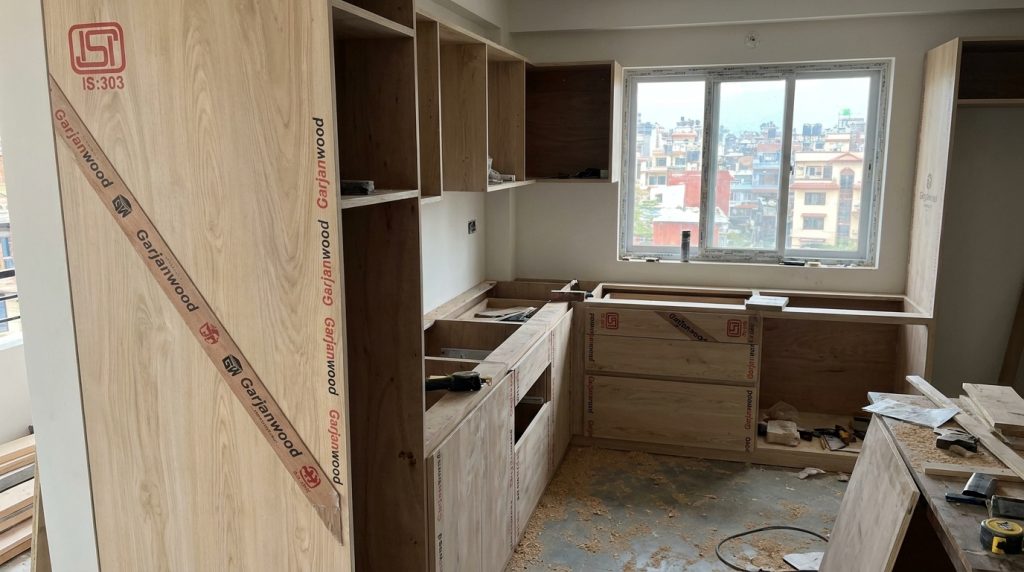
- IS:303 stamp on the sheet. This confirms the plywood has been tested to the Indian Standard for commercial-grade plywood, including water and pest resistance.
- Consistent core with no visible gaps. Check the edge of the sheet. A dense, evenly layered core resists water absorption far better than a core with soft filler patches.
- 100% borer and termite-proof treatment. Kitchens with any wood contact near the floor are also a common entry point for termites, so this shouldn’t be treated as a separate concern from waterproofing.
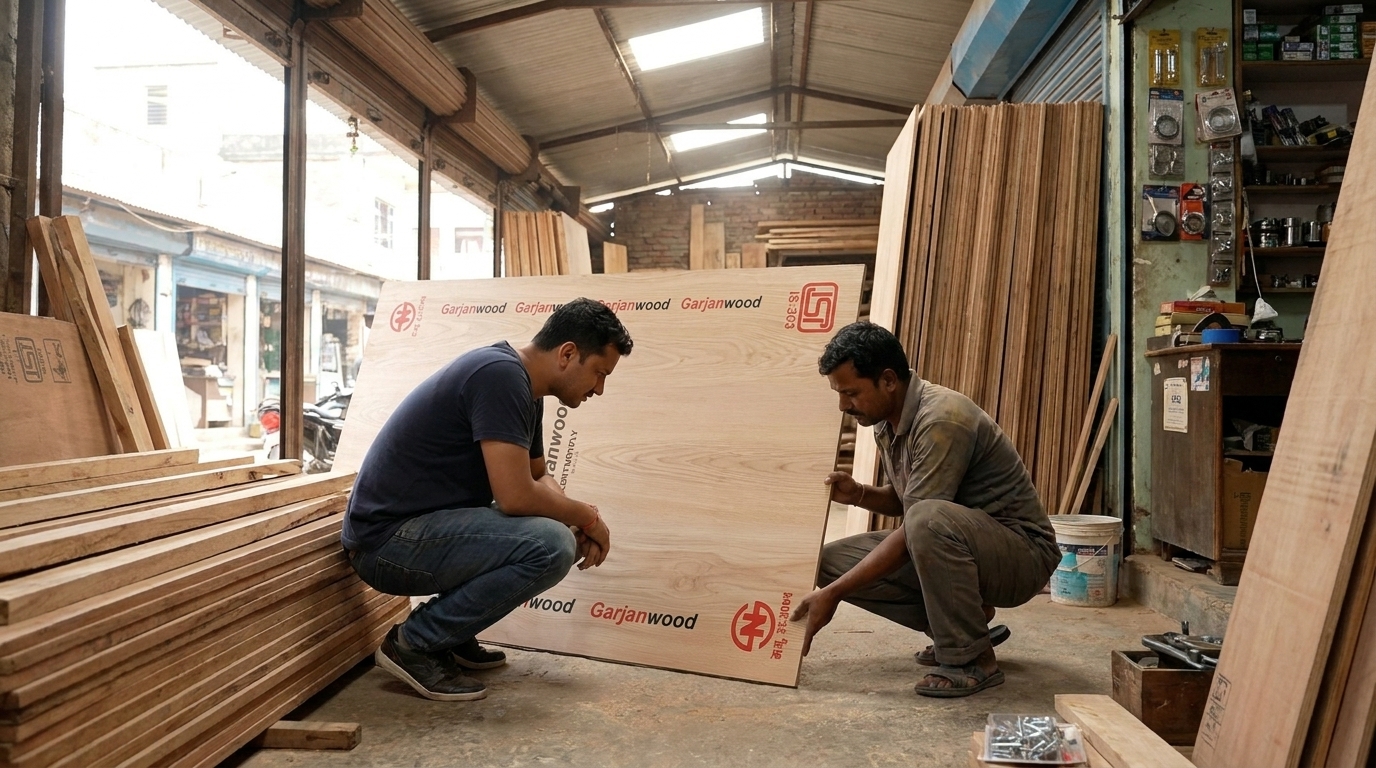
- A visible, consistent brand mark. A centered logo and branded edge strip help you confirm you’re getting genuine BWP sheets and not a mixed batch.
Garjanwood plywood is built to BWP standard with full borer and termite treatment across every layer, which covers both the moisture and pest risks a Kathmandu kitchen actually faces.
BWP vs BWR vs MR Plywood
| Feature | MR Grade | BWR Grade | BWP Grade (Garjanwood) |
|---|---|---|---|
| Water resistance | Low, indoor dry use only | Moderate | High, boiling water tested |
| Suitable for kitchens | No | Limited, low moisture zones only | Yes, full kitchen use |
| Termite resistance | Minimal | Varies by brand | 100% borer and termite proof |
| Performance in monsoon humidity | Poor | Fair | Strong |
| Recommended kitchen zones | None | Upper cabinets only | Sink base, countertop support, all shutters |
| Long term durability | 1 to 2 years | 3 to 5 years | 15 years plus |
Where BWP Plywood Matters Most in a Modular Kitchen
Not every cabinet needs the same grade, but skipping BWP in the wrong spot is where most kitchens run into trouble:
- Sink base cabinet. This is the single most exposed area to daily water contact.
- Countertop support structure. Any spill on the counter eventually finds its way down.
- Shutters facing the cooking area. Steam exposure here is constant, especially during monsoon cooking with windows closed.
- Tall units and pantry cabinets. Less obvious, but trapped humidity inside closed cabinets can be worse than open exposure.
Final Thought
A modular kitchen is one of the more expensive investments in a Kathmandu home, and the plywood underneath the laminate is what determines whether it still looks and functions well after a few monsoon seasons. BWP grade isn’t an upgrade you can skip on a budget kitchen and add later. It has to be right from the first sheet.
Garjanwood’s BWP plywood, backed by IS:303 certification and full termite treatment, is built for exactly this kind of climate. Before your next kitchen project, check the grade stamped on the sheet, not just the price per board.