If you live anywhere in the Terai belt, from Biratnagar to Nepalgunj, you already know the real enemy of your furniture isn’t scratches or sunlight. It’s the air itself. The Terai holds onto moisture for months at a stretch, and that damp air is exactly what termites and wood borers are waiting for. Pick the wrong plywood, and you won’t find out until your cabinet door swells shut or a shelf collapses when you least expect it.
This guide walks you through what actually makes plywood termite-resistant, why humidity changes the equation completely, and how to check a plywood board before you buy it.
Why Terai Humidity Is a Bigger Threat Than You Think
Termites don’t just show up because wood is nearby. They thrive because of moisture. The Terai’s combination of high humidity, warm temperatures, and monsoon flooding creates the ideal environment for termites and borer insects to breed and spread.
Ordinary plywood absorbs moisture from the air even without direct water contact. Once the wood fibers hold enough moisture, termites move in, and borer insects follow soon after. By the time you see the damage on the surface, the internal layers are usually already compromised.
This is why plywood ratings that work fine in drier hill regions often fail within a couple of years in Terai homes.
What Actually Makes Plywood Termite Resistant
A lot of sellers throw around the word “termite-proof” without explaining what it means. Here’s what actually matters:
- Chemical treatment of the veneer layers. Every layer of wood veneer needs to be treated, not just the outer surface. Surface-only treatment wears off, and that’s when termites find their way in through the edges.
- Boiling water resistant bonding (BWR). The adhesive holding the plies together needs to resist both moisture and heat. Weak bonding allows water to seep between layers, softening the wood and inviting termites.
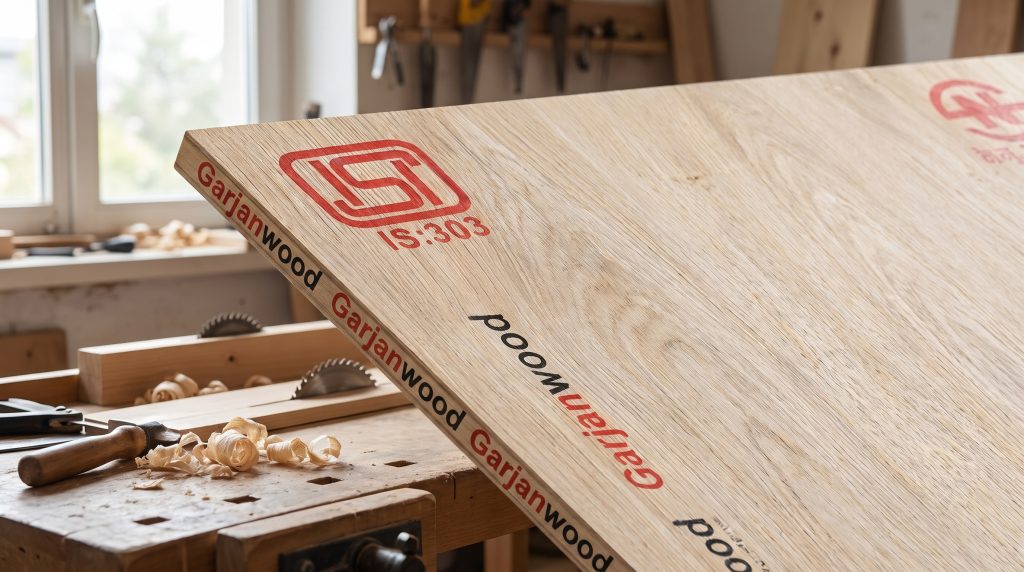
- IS:303 certification. This is the Indian Standard mark for commercial plywood, and it confirms the board has been tested for strength, water resistance, and pest resistance. Genuine certified plywood carries this stamp clearly, usually at the corners of the sheet.
- Density and core quality. Poor-quality core wood, with gaps or low-density filler pieces, gives termites easy entry points. A tightly pressed, uniform core is much harder to penetrate.
Garjanwood plywood is manufactured with 100% borer and termite-proof treatment across every internal layer, not just the surface, which is exactly the kind of protection Terai humidity demands.
Waterproof Is Not the Same as Termite Proof
This is a mistake a lot of buyers make. Waterproof plywood resists water absorption and swelling. Termite-proof plywood resists pest infestation. You need both, especially in the Terai.
A board can technically be BWR grade and waterproof but still lack proper chemical treatment against borers. On the other hand, some treated boards aren’t built to handle constant humidity exposure and start delaminating within a year.
Look for plywood that is explicitly marketed and certified as both waterproof and 100% borer and termite-proof. Garjanwood covers both bases, which matters a lot more in Terai districts than in drier parts of the country.
How to Check Plywood Before You Buy
You don’t need to be an expert to spot the difference between genuine termite-resistant plywood and a board that’s just labeled that way. Here’s what to check at the shop:
- Look for the red IS:303 certification stamps at all four corners of the sheet. If they’re missing or smudged, that’s a red flag.
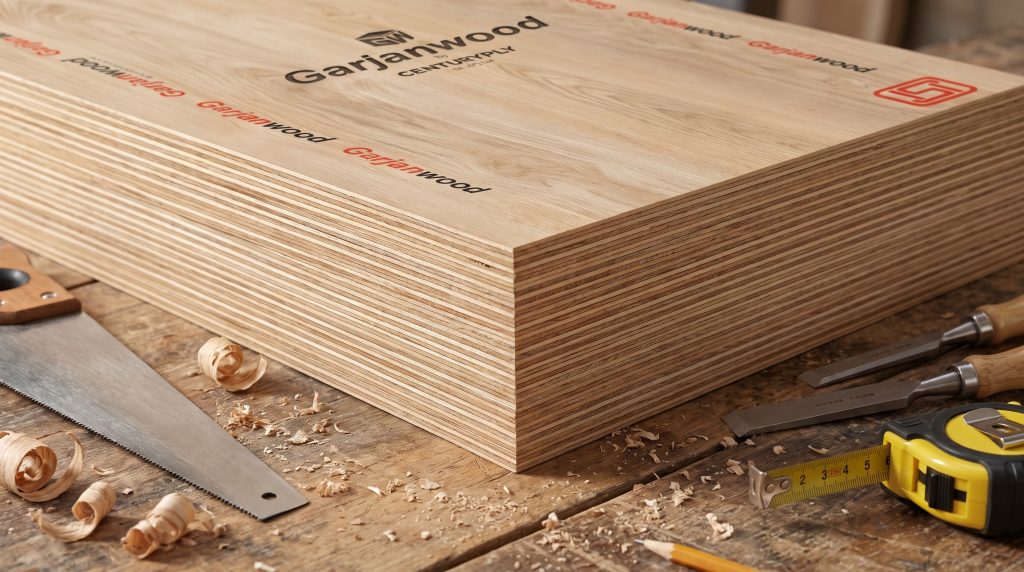
- Check the edge of the board. You should see consistent, tightly packed layers with no visible gaps or soft spots.
- Ask for the brand’s warranty period. Genuine termite-resistant plywood usually comes with a longer warranty because manufacturers trust the treatment to hold up.
- Smell the board. Poor quality treatment sometimes has a strong chemical odor that doesn’t fade. Properly treated plywood has a much milder smell.
- Check for a clear, centered brand logo along with the diagonal edge branding. This is a sign the sheet hasn’t been swapped or mixed with duplicate stock, which is unfortunately common in the plywood market.
Termite Resistant Plywood Comparison
| Feature | Ordinary Plywood | Basic BWR Plywood | Garjanwood (100% Borer & Termite Proof) |
|---|---|---|---|
| Termite treatment | None or surface only | Partial | Full veneer layer treatment |
| Water resistance | Low | Moderate | High, boiling water resistant |
| IS:303 certified | Rarely | Sometimes | Yes, stamped at all four corners |
| Suitable for Terai humidity | No | Limited | Yes |
| Expected lifespan in humid areas | 1 to 2 years | 3 to 5 years | Long term, 15 years plus |
| Warranty support | Minimal | Varies | Strong manufacturer backing |
Where This Matters Most in Your Home
Not every piece of furniture faces the same risk level. If you’re building or renovating in a Terai household, prioritize termite-resistant plywood in these areas first:
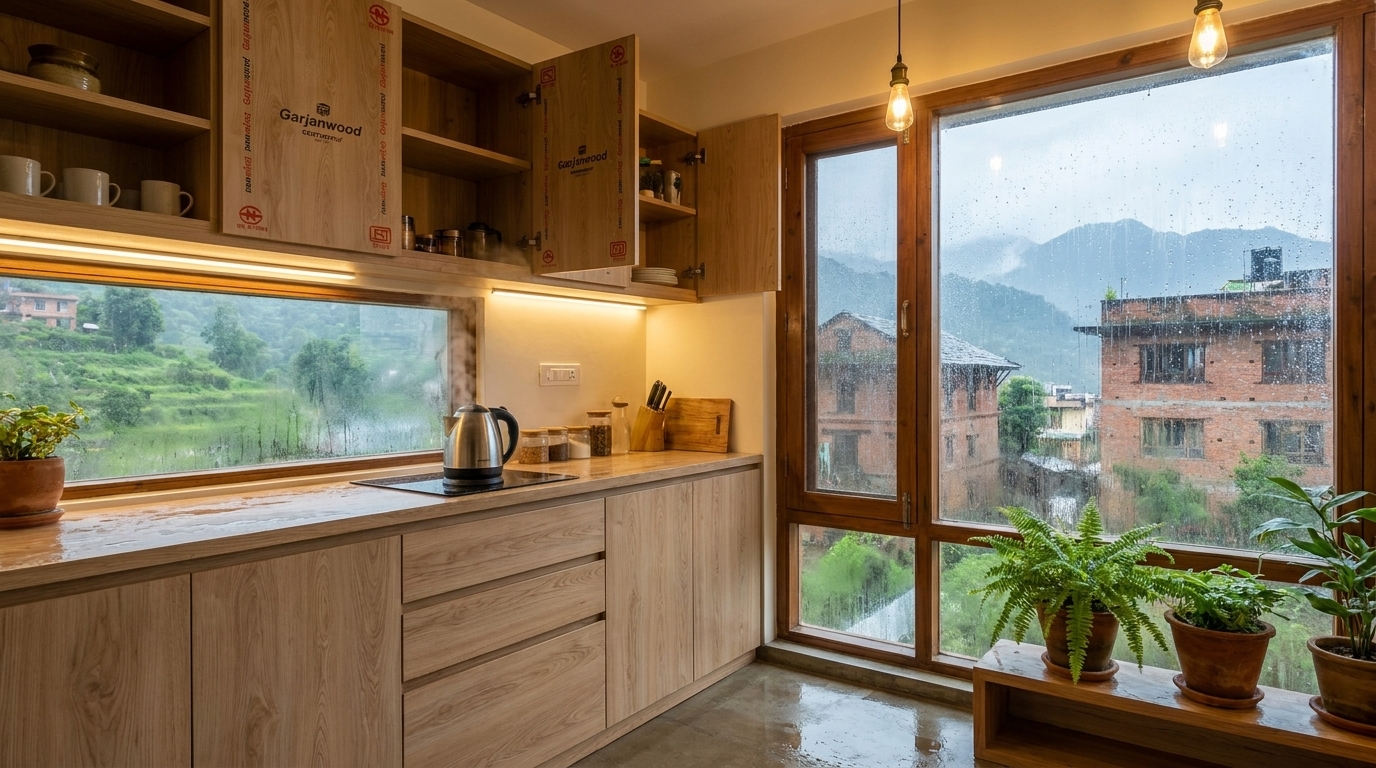
- Kitchen cabinets and shutters, where steam and spills add extra moisture
- Bathroom storage units, which sit in the most humid zone of the house
- Ground floor furniture, since moisture rises from the floor during monsoon season
- Window and door frames, which are exposed to outdoor humidity daily
- Any furniture placed against exterior walls, where dampness collects over time
Final Thought
Termite damage rarely happens overnight. It builds quietly over months, hidden inside the very layers you can’t see until it’s too late. In a climate like the Terai’s, choosing plywood isn’t just about looks or price. It’s about picking a board that’s actually built to survive the humidity, not just tolerate it for a season.
Garjanwood’s 100% borer and termite-proof construction, backed by IS:303 certification, is built specifically for climates like this. Before your next furniture project, take the time to check the certification stamps and ask the right questions. It’s a lot cheaper than replacing swollen, termite-eaten furniture two years down the line.