
Every monsoon, the same story repeats in thousands of Nepali homes. A wardrobe door stops closing properly, the bottom panel of a cabinet swells at the edge, and the laminate near the floor starts to lift. Most owners blame the plywood, but in many cases the real problem is how the furniture is placed, cleaned and cared for. The good news is that you can protect plywood furniture from moisture with a few habits that cost almost nothing. This guide explains why moisture damage happens, where it strikes first, and exactly what to do about it, season by season.
Why Plywood Furniture Absorbs Moisture
Wood is a natural material that takes in and gives out moisture depending on the air around it. Scientists call this property hygroscopic, and the US Forest Products Laboratory explains it well in its Wood Handbook chapter on moisture relations. Plywood behaves better than solid wood because its thin layers are glued with the grain running in alternate directions, which keeps it flatter and more stable. But it is not immune. Moisture enters mainly through three routes: exposed edges, unfinished surfaces, and direct contact with water.
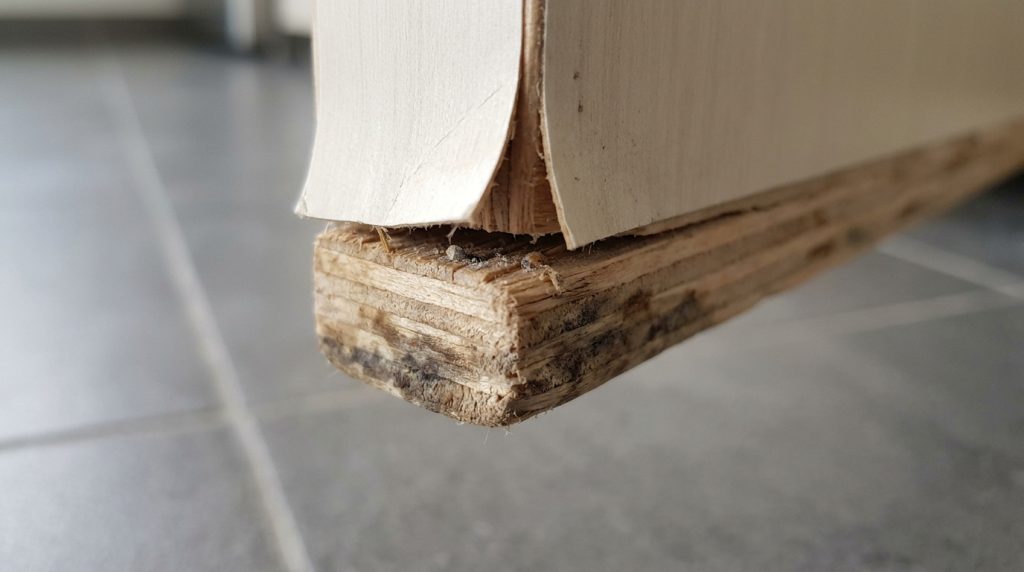
Edges are the weakest point because they expose the ends of every layer, like a bundle of tiny straws. A damp floor, a leaking pipe or a wet mop can pull water in through those ends within hours. Once the layers swell, the surface laminate or veneer above them starts to bubble or crack. That is why protecting the edges and keeping furniture dry at the bottom matters more than anything else you do.
The Five Danger Zones in a Nepali Home
Moisture does not attack evenly. Some spots in your home are far more risky than others. Check these first.
| Danger zone | Why it is risky | What to do |
|---|---|---|
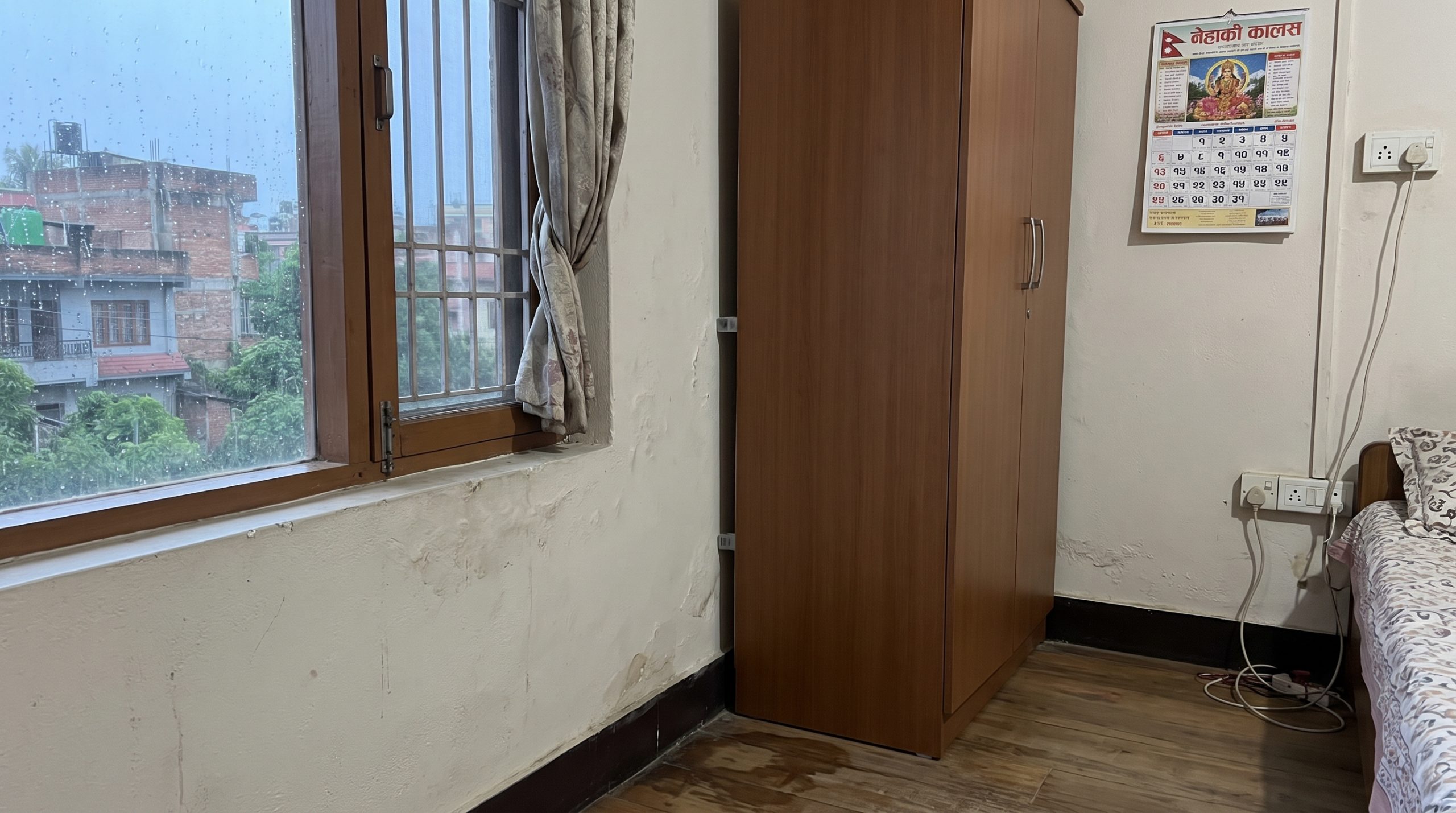
| Back panel against an outer wall | Damp walls pass moisture into the furniture, especially in monsoon | Keep a gap of about 25 to 50 mm, or fix small spacers behind the unit |
| Bottom of wardrobes and cabinets | Floor mopping, spills and rising damp reach the lowest panel first | Use a raised plinth or legs, and wipe the floor instead of flooding it |
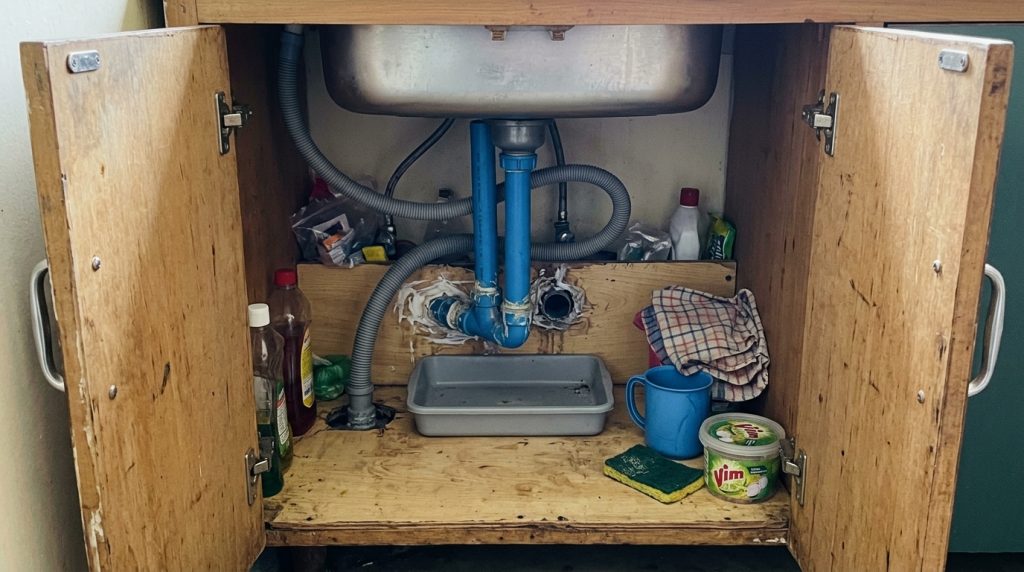
| Under the kitchen sink | Slow pipe leaks and wet utensils keep the panel damp | Use a water resistant base, seal pipe cuts, and add a plastic tray |
| Bathroom vanity | Hot steam condenses inside closed cabinets | Ventilate, keep an exhaust fan on, and finish both faces and all edges |
| Beside windows | Rain splash and condensation on glass | Close windows during storms and keep a hand’s width of distance |
Step by Step: How to Protect Plywood Furniture from Moisture
Step 1: Lift furniture off the floor. Even 50 mm of clearance helps. Furniture sitting flat on a damp floor behaves like a wick. If your wardrobe has no legs, slip in plastic or rubber pads under the base, or build a small plinth from water resistant board.
Step 2: Leave a gap from the wall. Pushing a wardrobe tight against an outer wall traps moist air behind it. A small gap lets air circulate and stops the back panel from turning musty. Also check the wall itself. If paint is peeling or you see white salt marks, fix the wall first with a damp proof coating, otherwise it will keep feeding the furniture.
Step 3: Seal every exposed edge. If the edges of your shelves, doors or cut outs for pipes are bare, they will drink water. Edge banding, PU varnish or a good sealer closes them up. We cover this in detail in our guide to sealing plywood edges.
Step 4: Finish both faces. A laminate or paint coat on only one side makes the board take in moisture unevenly, which can lead to bowing. Where possible, finish the inside and back too, even with a simple coat of varnish.
Step 5: Manage the air in the room. Open windows for an hour on dry afternoons, run a fan, and avoid drying wet clothes inside closed bedrooms. Small moisture absorbers or charcoal bags in wardrobes help during the wettest weeks.
Step 6: Wipe, do not flood. Clean spills at once with a lightly damp cloth, then dry with a soft cloth. Never pour water on furniture or mop right up to the base.
Monsoon Checklist for Plywood Furniture
Print this or save it on your phone before the rains start.
- Pull wardrobes and beds a little away from outer walls.
- Check that no pipe, roof or window leak is dripping near furniture.
- Open wardrobe doors and drawers for an hour on dry days.
- Place charcoal bags or moisture absorbers in closed storage.
- Wipe kitchen cabinet bases after cleaning the floor.
- Look at the lowest panels for swelling, dark stains or a musty smell.
- Re seal any chipped edges before they absorb water.
Protecting Kitchen and Bathroom Plywood
Kitchens and bathrooms deserve special attention because they combine steam, splashes and poor air flow. For these areas, choose boiling water proof (BWP) grade plywood for the carcass, because its glue is designed to handle moisture far better than interior grade. We explain the grades in our post on waterproof plywood. Remember that “waterproof” is relative. Even the best plywood will suffer if water stands on it for days, so good habits still matter.
In the kitchen, seal the cut around the sink and gas pipe, keep a rubber mat or tray under the sink, and do not store wet utensils in closed cabinets. In the bathroom, run the exhaust fan after a hot shower, leave the cabinet door slightly open on dry days, and make sure the laminate is intact on all sides.
Signs Moisture Has Already Got In
Catch problems early and repair is simple. Late, and the panel often needs replacing. Look for:
- Swollen or rounded edges at the bottom of doors and panels
- Laminate bubbling, lifting or peeling at corners
- Dark patches or a musty smell inside the cabinet
- Doors and drawers that stick or no longer align
- White or green fuzzy mould on the inside surface
If you spot these, move the furniture away from the source of dampness, open all doors, and let it dry naturally. Do not point a heater or hair dryer directly at laminate, because sudden heat can cause it to warp or peel. Wipe light mould with a mild soap solution and dry thoroughly. Once the panel is fully dry, sand any raised edge lightly and seal it. If the swelling is severe, read our guide to fixing common plywood furniture problems at home.
Quick Decision Box
| If your situation is… | Do this first |
|---|---|
| Wardrobe against an outer wall | Add a 25 to 50 mm gap and check the wall for damp |
| Swollen bottom edge | Dry fully, sand lightly, seal and raise the unit off the floor |
| Kitchen cabinet under the sink | Replace with BWP grade, seal pipe cuts, add a tray |
| Musty smell inside a closed cupboard | Air it out, add absorbers, and check for a hidden leak |
A Note on Nepal’s Climate
Nepal’s weather varies sharply between regions. In the Terai, including Biratnagar, Jhapa and Morang, the monsoon brings long weeks of high humidity, so ventilation and raised bases matter most. In the hills, damp walls and cold nights lead to condensation that settles behind furniture. In the Kathmandu Valley, winter fog and indoor heating swings can also stress panels. Choosing the right grade for your region is just as important as care habits, so read our guide on monsoon humidity and grade selection.
Frequently Asked Questions
Does paint protect plywood from moisture? A good coat helps, but only if it covers every face and edge. Chipped or thin paint will not stop water getting in.
Is waterproof plywood really waterproof? It resists moisture far better than ordinary grades, but no plywood is safe if left standing in water for long.
Can I fix swollen plywood? Mild swelling can often be sanded back once fully dry, then sealed. Deep swelling usually means the panel should be replaced.
Build Furniture That Lasts with Garjanwood
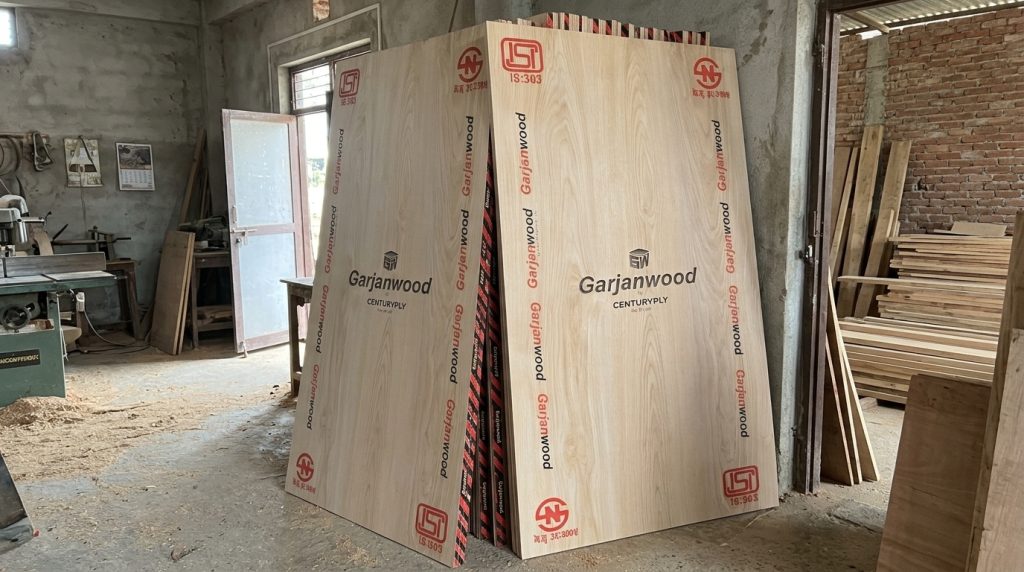
Care habits protect furniture, but the plywood you start with decides how much protection you need. Garjanwood by CenturyPly is manufactured at Century Ply Industries in Barju, Sunsari, and is IS:303 certified, so you start with a board made to a recognised national standard. Look for the red IS:303 stamp at the corners of every sheet, the diagonal red and black edge band, and the GW by CenturyPly logo. Ask your carpenter to use it for the carcass, follow the steps above, and your furniture will serve you through many monsoons. Explore more at centuryplynepal.com.