


Ghar banaune process ma most people focus on the big things first.
Foundation.
Tiles.
Paint.
Doors.
Kitchen.
But when the construction is almost finished and the interior work begins, another question suddenly appears:
“अब plywood कहाँ-कहाँ चाहिन्छ?”
This is where many homeowners get confused.
Because plywood is not usually used in just one place. A single home may require different types of boards for wardrobes, kitchen cabinets, storage units, study tables, and other furniture.
The bigger mistake is waiting until the carpenter arrives and then deciding everything on the spot.
A better approach?
Before your furniture work begins, walk through every room and create a simple checklist.
Here is a practical room-by-room guide.
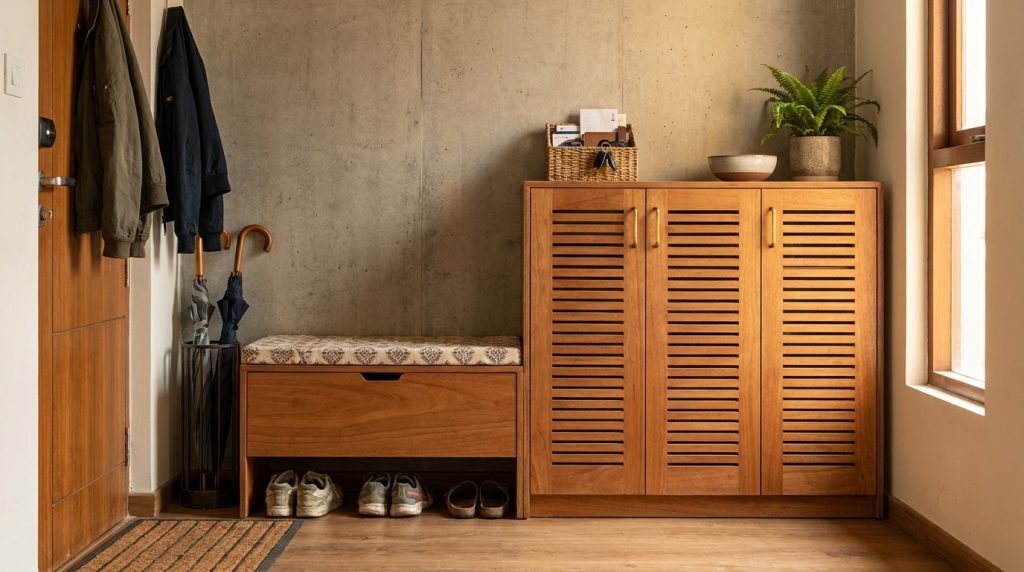
1. Entrance and Shoe Storage
The entrance is often the first place where clutter starts.
Shoes. Umbrellas. Bags. Helmets. Keys.
A simple shoe cabinet can immediately make the entrance look cleaner and more organised.
Consider:
- Shoe cabinet
- Wall-mounted storage
- Seating bench with storage
- Key storage unit
- Small decorative console
If the entrance is exposed to moisture from wet shoes or umbrellas, discuss moisture protection and edge finishing with your carpenter.
Before approving the design, ask:
- Will the cabinet touch the floor?
- How will water from wet shoes be handled?
- Are the edges properly sealed?
- Is there enough ventilation?
A beautiful cabinet that starts swelling after one rainy season is not a good investment.
2. Living Room: TV Unit and Storage
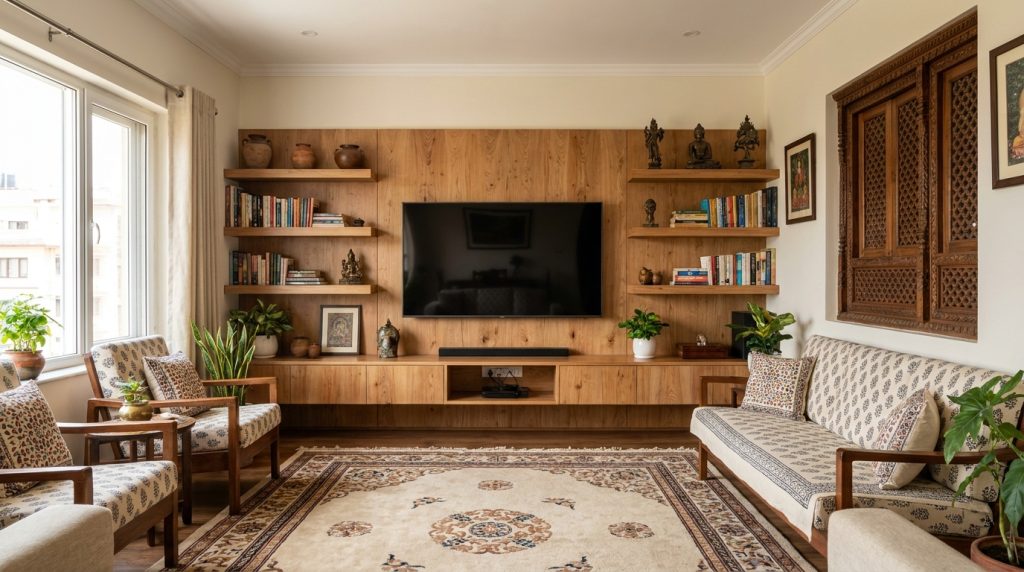
The living room is where plywood-based furniture often becomes highly visible.
A TV unit may look simple, but poor material selection can become obvious over time through sagging shelves, damaged edges, or loose fittings.
Common plywood applications:
- TV panel
- TV cabinet
- Floating shelves
- Display units
- Storage cabinets
- Decorative wall panels
Before finalising the design, think beyond appearance.
Ask yourself:
Where will the wires go?
Will the cabinet have enough ventilation?
Do you actually need that many open shelves?
A Pinterest-style design can look beautiful online but become difficult to clean in real life.
Choose functionality before decoration.
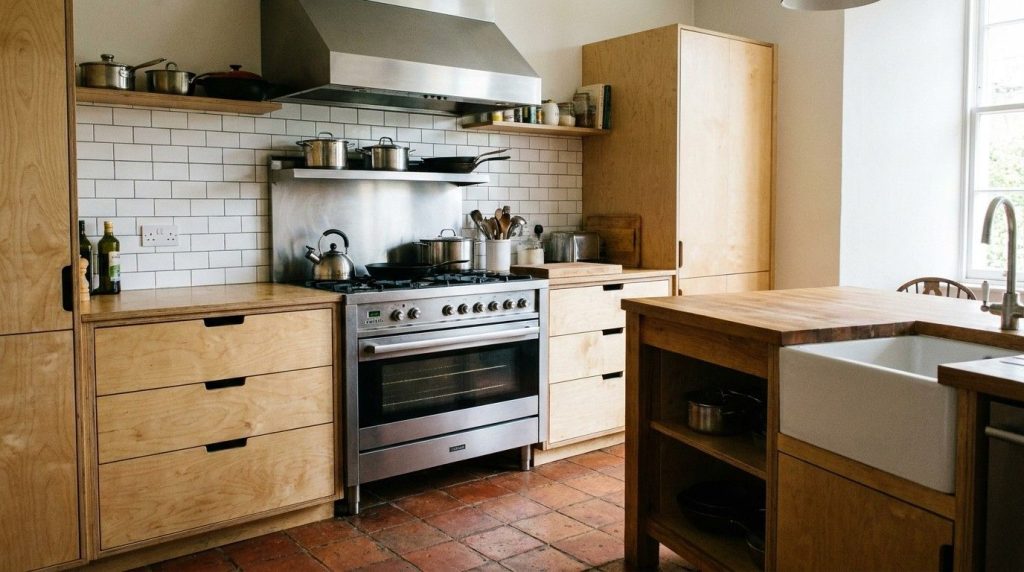
3. Kitchen: The Place Where Material Choice Matters Most
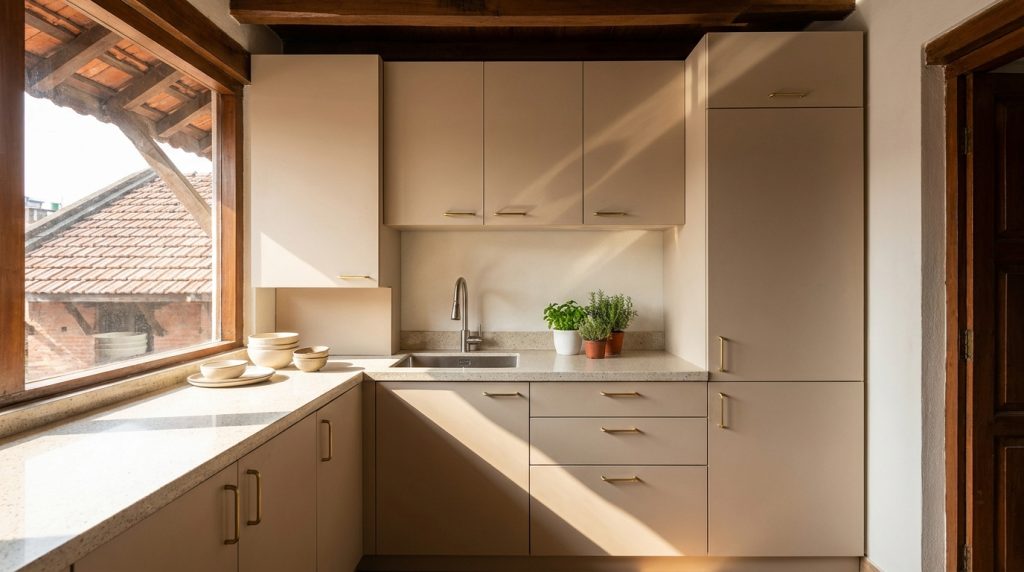
The kitchen is one of the most demanding areas of the house.
There is steam.
Water.
Oil.
Heat.
Daily opening and closing of cabinets.
That means you should never select kitchen materials based only on appearance or the cheapest quotation.
Common plywood applications include:
- Base cabinets
- Wall cabinets
- Pantry storage
- Drawer boxes
- Tall units
- Appliance cabinets
The area around the sink deserves special attention because accidental water exposure is common.
Before work starts, confirm:
- Which board is being used near the sink?
- How are exposed edges sealed?
- Is the cabinet raised from the floor?
- What material is being used for the back panel?
- Are hinges and hardware suitable for frequent use?
The cheapest kitchen quotation is not always the cheapest kitchen in the long run.
If cabinets fail early, replacement can cost far more than selecting the right material from the beginning.
4. Bedroom Wardrobes: Plan Storage Before Buying Plywood
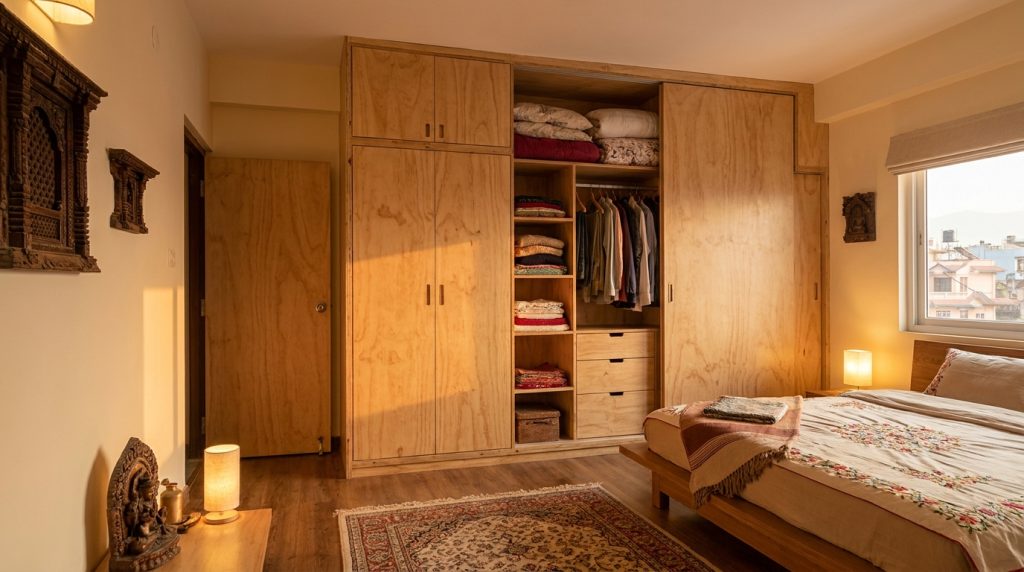
Wardrobes are one of the largest plywood requirements in a home.
But homeowners often make a mistake.
They select the outer design first.
Then storage planning comes later.
Instead, first decide what actually needs to be stored.
Your wardrobe checklist:
- Hanging clothes
- Folded clothes
- Sarees or traditional clothing
- Winter clothes
- Bags
- Suitcases
- Jewellery or valuables
- Bedsheets and blankets
A well-designed wardrobe should fit your lifestyle.
A large wardrobe with poor internal planning can still become messy within a few weeks.
Before construction begins, ask your carpenter to show you:
- Internal divisions
- Shelf height
- Hanging space
- Drawer placement
- Loft storage
- Hardware placement
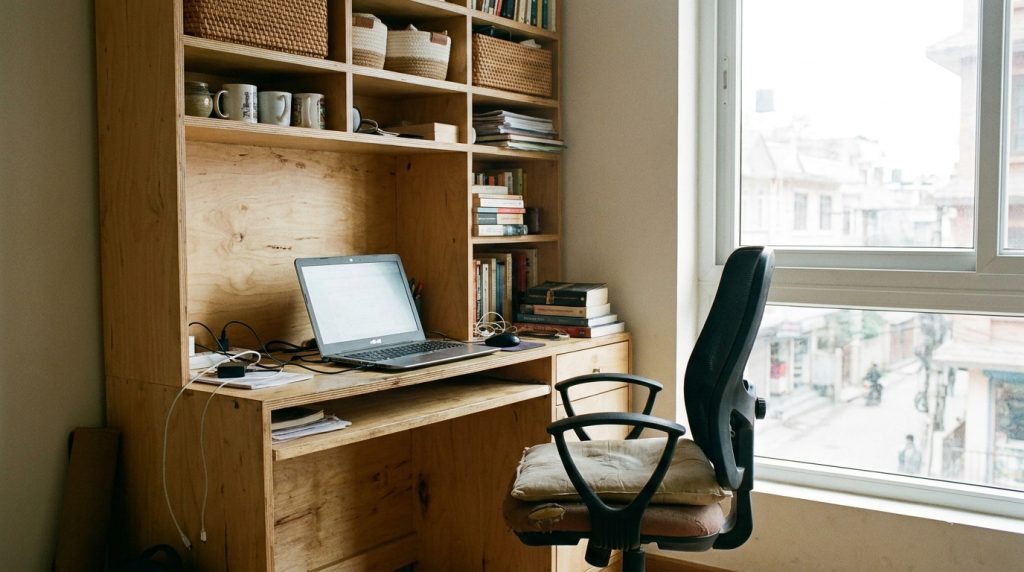
5. Study Room and Home Office
Work-from-home and study spaces are becoming increasingly common.
A basic table may be enough today.
But think about what happens when you add:
- Laptop
- Monitor
- Books
- Printer
- Charging devices
- Documents
A poorly designed desk quickly becomes cluttered.
Plywood can be used for:
- Study tables
- Wall-mounted desks
- Bookshelves
- Storage cabinets
- Floating shelves
For small rooms, a wall-mounted or foldable desk can save valuable floor space.
The important thing is not to make the furniture complicated.
Simple designs are often easier to maintain.
6. Puja Room or Mandir Area
For many Nepali and Indian homes, the puja area is an important part of the interior.
Depending on the design, plywood may be used for:
- Mandir cabinets
- Storage drawers
- Decorative panels
- Shelving
- Background structures
Because this area may include diyas or other heat-producing items, the surrounding material selection and safety planning should be discussed carefully.
Never treat the mandir unit as just another decorative cabinet.
Think about:
- Heat exposure
- Ventilation
- Cleaning
- Electrical wiring
- Storage requirements

7. Under-Stair Storage: The Space Most Homes Waste
Look at the space under your staircase.
Is it empty?
It may be one of the most useful storage areas in the house.
Depending on the layout, it can become:
- Shoe storage
- Cleaning equipment storage
- Bookshelves
- Closed cabinets
- Display shelving
- Utility storage
The key is measuring properly.
Don’t simply fill every space with cabinets.
Think about what you will actually store there.
A smart storage design should solve a real problem—not just add furniture.

8. Bathroom Vanity and Wet-Area Furniture
This is an area where homeowners need to be especially careful.
Bathrooms have constant moisture.
That means the material, finishing, and installation method all matter.
Possible applications include:
- Vanity cabinets
- Mirror cabinets
- Storage units
Before installing furniture near a wet area, discuss the moisture exposure clearly with your carpenter or interior professional.
Ask:
- How close is the cabinet to direct water?
- Is the board suitable for that environment?
- How are edges protected?
- Is there enough clearance from the floor?
Do not assume every plywood board is suitable for every location.
9. Balcony and Utility Storage
Many homes need storage for:
- Cleaning equipment
- Gardening tools
- Buckets
- Seasonal items
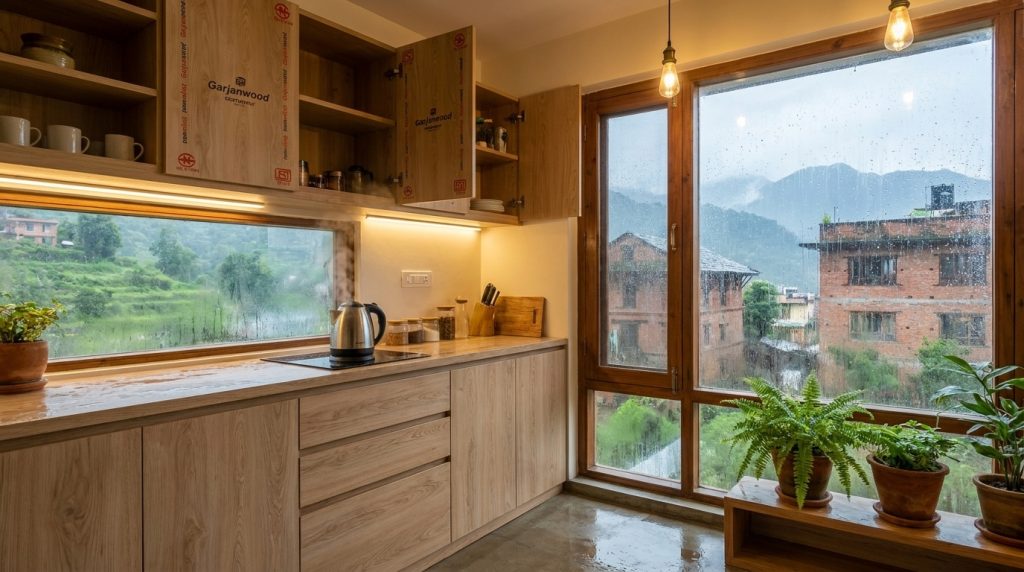
But balconies and utility spaces may experience humidity, rain, or temperature changes.
Before adding plywood furniture, consider how exposed the location is.
An enclosed balcony and an open balcony do not face the same conditions.
Always explain the exact environment before selecting the material.
The Biggest Mistake: Choosing One Board for the Entire House
One of the simplest mistakes homeowners make is assuming:
“घरभरि एउटै plywood लगाइदिए हुन्छ।”
Not necessarily.
Different parts of the house experience different conditions.
A dry bedroom wardrobe does not face the same challenges as a cabinet near a kitchen sink or a bathroom vanity.
Instead of asking only:
“Which plywood is best?”
Ask:
“Where exactly am I using it?”
That one question can lead to a much better decision.
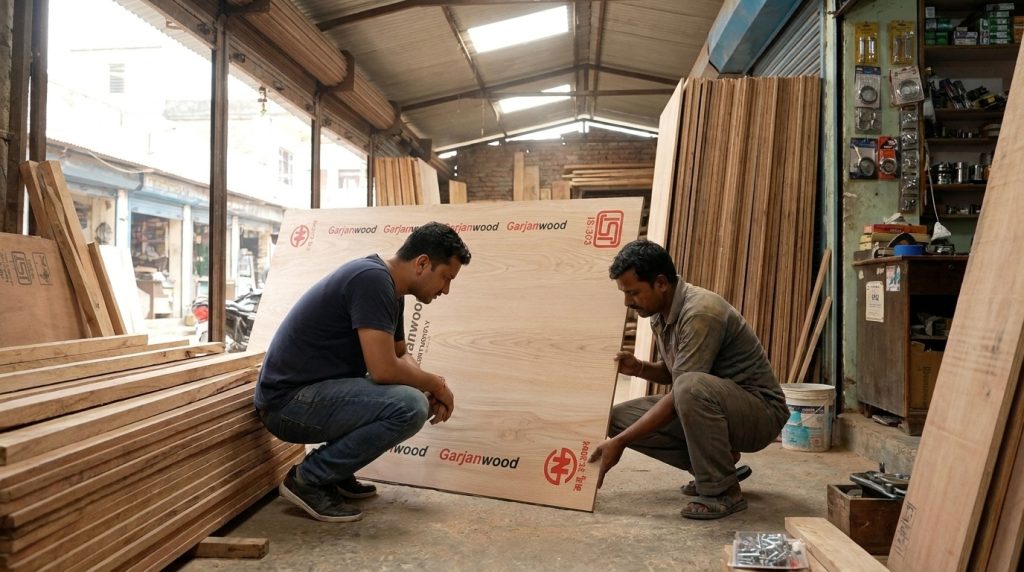
Your Naya Ghar Plywood Checklist
Before giving the final approval to your carpenter, go through this list:
Entrance
☐ Shoe cabinet
☐ Storage bench
☐ Wall storage
Living Room
☐ TV unit
☐ Display cabinet
☐ Storage cabinet
☐ Shelves
Kitchen
☐ Base cabinets
☐ Wall cabinets
☐ Sink-area planning
☐ Pantry storage
Bedroom
☐ Wardrobes
☐ Loft storage
☐ Bedside storage
☐ Study table
Study Room
☐ Desk
☐ Bookshelves
☐ Storage
Puja Area
☐ Mandir unit
☐ Storage
☐ Safety around heat sources
Other Areas
☐ Under-stair storage
☐ Bathroom vanity
☐ Utility storage
☐ Balcony storage
Final Thoughts
Building a new home is exciting.
But interior work becomes expensive when decisions are rushed.
Don’t wait until the carpenter arrives and asks:
“Sir, कुन plywood लगाउने?”
Plan each room first.
Understand what the furniture will be used for.
Consider moisture, weight, daily usage, and location.
Then select the appropriate material.
A good home interior is not about using the most expensive material everywhere.
It’s about using the right material in the right place.
For more information about plywood options and suitable applications, explore the Garjanwood by CenturyPly range and discuss your requirements with an authorised dealer or interior professional.