

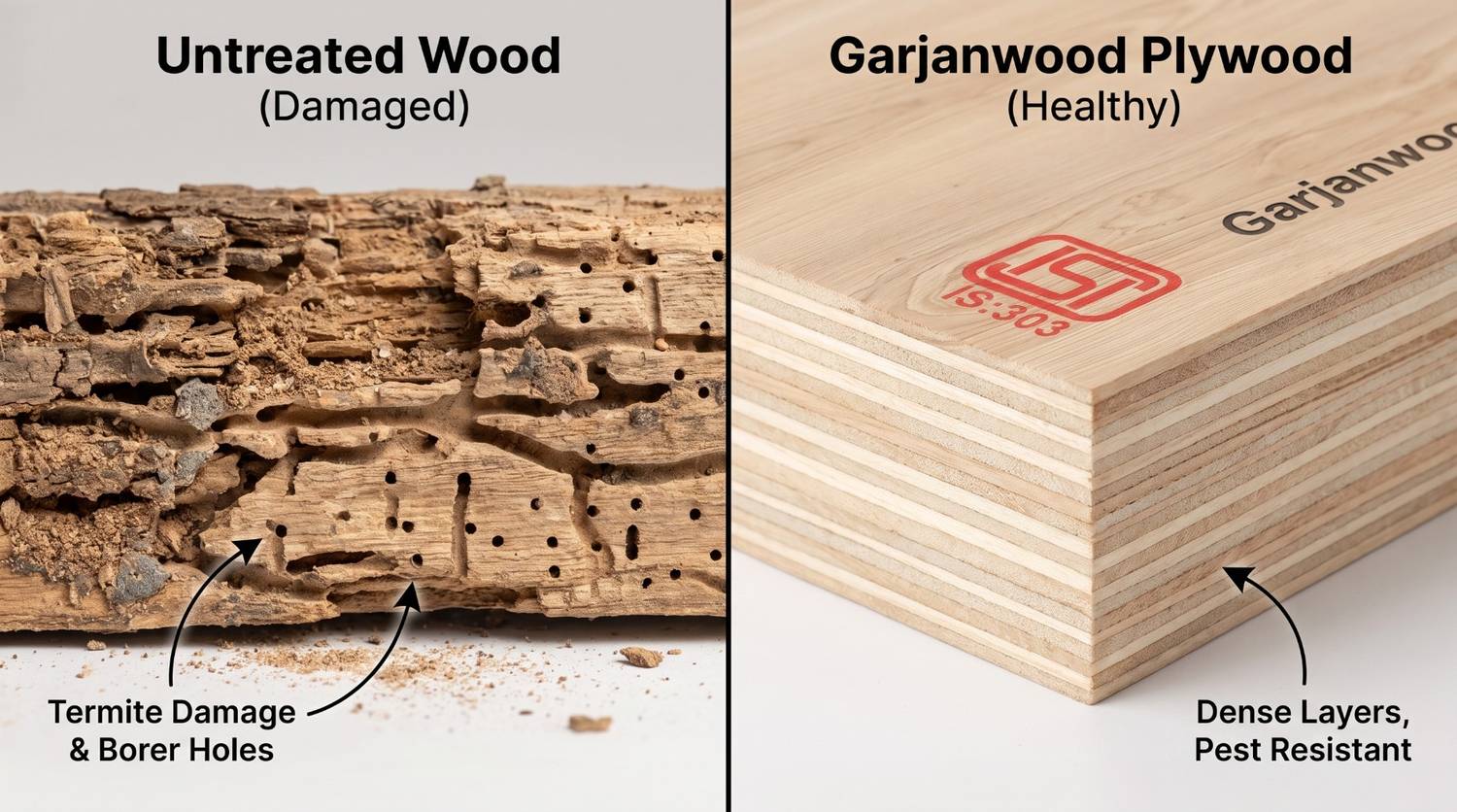
100% Borer and Termite Proof Plywood: Why Bugs Never Win with Garjanwood
Here’s a scary but common story: a family buys a beautiful wooden wardrobe, uses it for three or four years, and one day a door handle comes off in their hand, because the wood underneath has been quietly eaten away from the inside. By the time you can see or smell the damage, it’s usually too late to save the furniture.
This is exactly why “termite-proof” and “borer-proof” plywood matter so much in Nepal and India, and why it’s worth understanding what these terms actually mean before you buy.
What’s the Difference Between Termites and Borers?
People often use these words interchangeably, but they’re two different problems:
- Termites live in colonies, often underground, and tunnel through wood searching for cellulose to eat. They can attack a piece of furniture without ever being seen on the surface.
- Borers (wood-boring beetles) lay eggs inside the wood. The larvae hatch and eat their way through the wood from within, leaving small pinholes as their only visible trace.
Both attack from the inside out, which is what makes them so dangerous. Your furniture can look perfectly fine on the outside while being hollow underneath.
Why Ordinary Plywood Is Vulnerable
Regular, untreated plywood is basically a buffet for these pests. Wood is made of cellulose, and if there’s no chemical treatment in the manufacturing process, termites and borers can tunnel through it just as easily as through raw timber, sometimes even more easily, since plywood veneers are thin and easy to chew through layer by layer.
Cheap or duplicate plywood sold without proper treatment is one of the biggest reasons furniture fails early in humid regions like the Terai, Kathmandu Valley, and much of northern India.
What “100% Borer and Termite Proof” Actually Means
For plywood to genuinely resist termites and borers, the wood veneers need to be chemically treated, typically with boron-based compounds, before they’re bonded together. This isn’t a surface coating that wears off; it’s treated into the wood itself, so even if the outer layer is damaged, the inner layers are still protected.
This is a core part of how Garjanwood is manufactured. Every veneer layer is treated for pest resistance before bonding, not just sprayed on the outside afterward. Combined with dense Garjan wood as the core, it gives termites and borers nowhere to get a foothold.
How to Check If Plywood Is Really Treated (Not Just Advertised)
Marketing claims are easy to print. Here’s how to actually verify:
- Check for the IS:303 certification stamp. This Indian Standard covers plywood quality, including pest resistance testing. Genuine certified sheets carry this mark at the corners.
- Ask for the warranty terms. Brands confident in their treatment process usually offer multi-year warranties specifically covering termite and borer damage.
- Smell and inspect the veneer edges. Treated plywood often has a faint, consistent chemical scent (not a strong or unpleasant one) and evenly colored inner layers. Patchy or untreated-looking veneers are a red flag.
- Buy from an authorized dealer. Duplicate plywood claiming “100% termite proof” without real treatment is unfortunately common in the market. Sticking to known brands and authorized sellers protects you here.
Termite Protection Isn’t the Only Thing That Matters
While pest resistance is critical, it’s worth pairing it with the other two things that determine how long your furniture really lasts:
- Water resistance: Moisture softens wood and actually makes it more attractive to pests, so waterproof or BWR-grade plywood works hand in hand with termite protection, especially in kitchens and bathrooms.
- Fire-retardant properties: Not something people think about until it matters. Fire-retardant treatment slows down how quickly plywood catches and spreads flame, which is a meaningful safety factor for furniture in kitchens or near electrical points.
Garjanwood is built to bring all three together: termite and borer resistance, water resistance, and fire retardant treatment, so you’re not choosing one protection over another.
The Real Cost of Skipping This
Untreated plywood might save you a few hundred rupees per sheet upfront. But replacing an entire wardrobe or kitchen because termites hollowed it out in three years costs far more in money, time, and hassle. Termite-proof plywood is one of those decisions where paying slightly more now is genuinely the cheaper option over the life of your furniture.
Final Thought
Termites and borers do their damage silently, which is exactly why prevention matters more than cure here. Look for the IS:303 stamp, buy from authorized dealers, and choose plywood that’s treated all the way through, not just on the surface. Your furniture should be something you replace by choice, not because pests decided for you.