

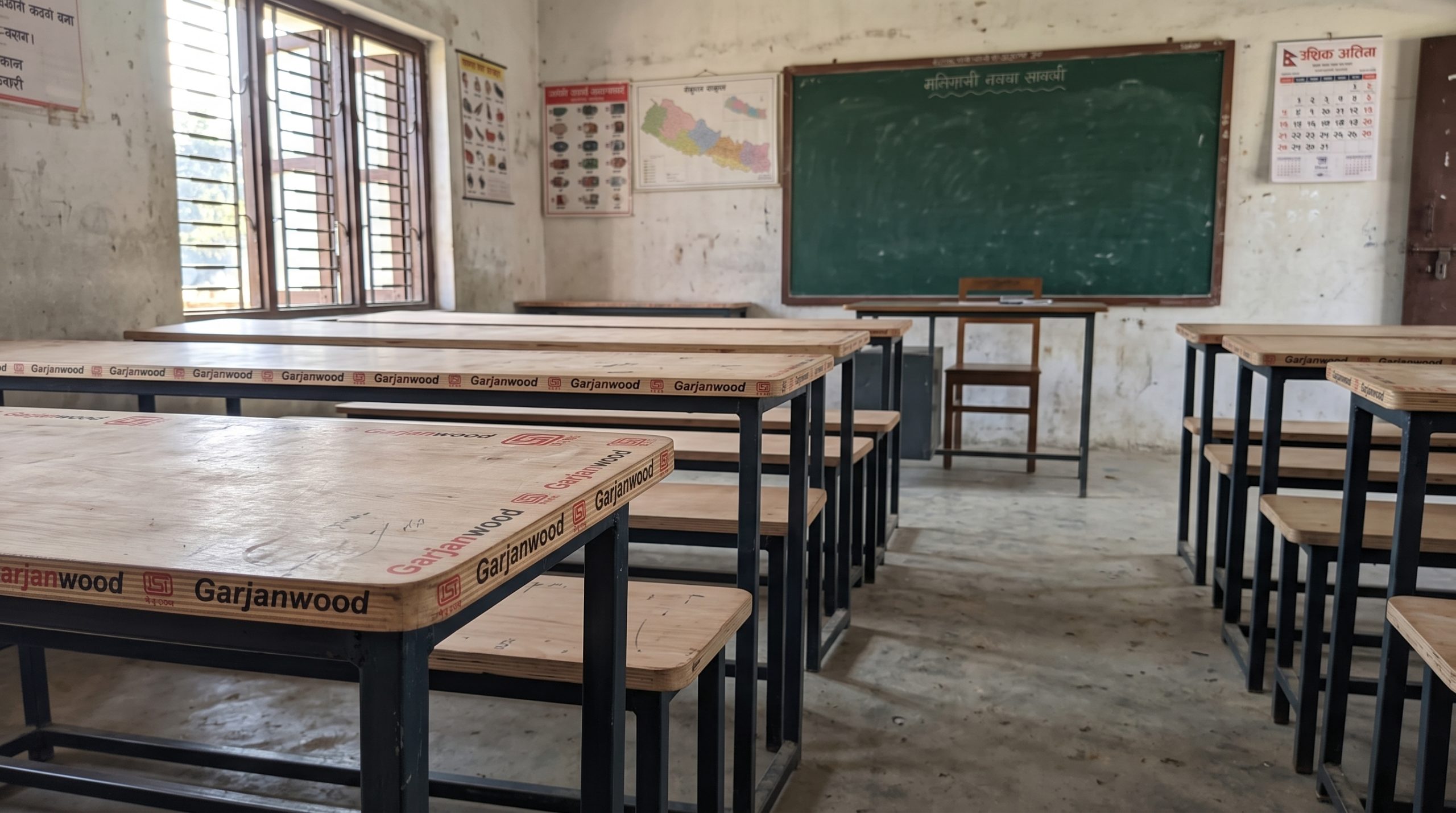
A classroom is one of the toughest environments a piece of furniture will ever face. Desks are dragged, kicked, climbed on, scratched with pens and wiped daily, and they do it for hundreds of students over many years. For school owners and coaching centre managers in Nepal, the real question is not what looks cheapest on the day of purchase, but what costs least over ten years of use. This guide to school furniture plywood Nepal buyers can use explains how plywood handles that challenge, which parts need which thickness, and how to order in bulk without surprises.
Why Plywood Suits Institutional Furniture
Institutions need furniture that is strong, uniform and easy to repair, and plywood delivers all three.
- Strength across wide panels: Layered construction resists cracking and warping better than wide solid timber boards.
- Consistency: Hundreds of identical desks can be cut from the same board size, so every classroom looks and behaves the same.
- Repairability: A damaged tabletop or shelf can be replaced as a single panel, not the whole unit.
- Cost control: Plywood makes efficient use of material, which matters when ordering for hundreds of seats.
For schools working on tight budgets, those advantages add up quickly across the life of the furniture.
What Institutional Buyers Really Need
Parents buy for one child. Schools buy for hundreds. The priorities are different.
| Priority | What it means in practice |
|---|---|
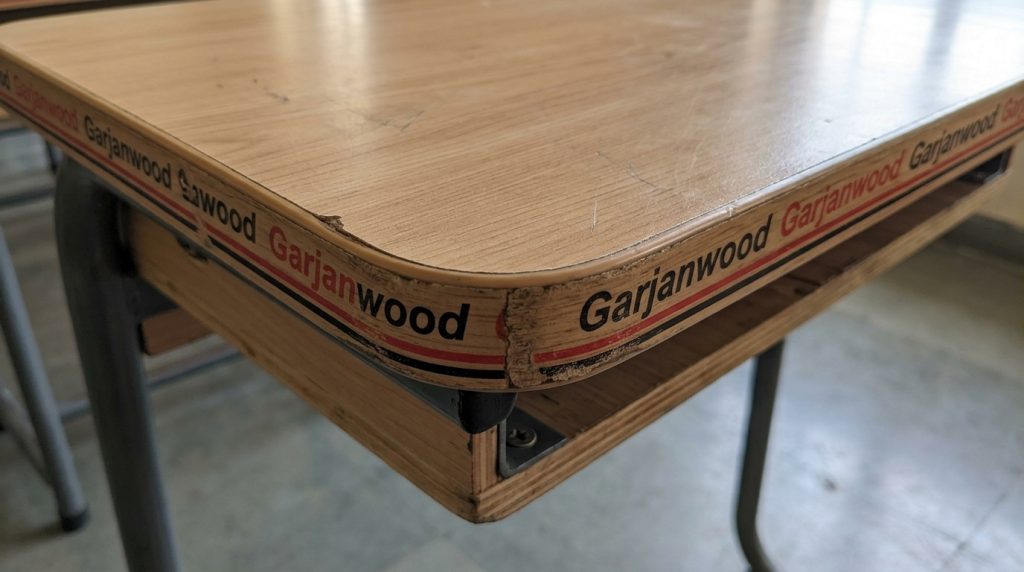
| Durability | Surfaces that resist scratches, ink and daily wiping |
| Safety | Rounded corners, smooth edges, no protruding screws, stable bases |
| Consistency | Same size, colour and finish across every unit |
| Easy maintenance | Wipeable tops, replaceable parts, simple hardware |
| Cost over time | Lower repair and replacement rates, not just a low first price |
Keep this list in front of you when comparing quotes. A lower-priced desk that needs repair every term is the expensive choice.
Matching Plywood to Each Furniture Type
| Furniture | Suggested plywood | Notes |
|---|---|---|
| Student desk and bench tops | 18 mm with laminate top and banded edges | Laminate protects against ink and scratches |
| Desk storage boxes and book shelves | 12 mm to 18 mm | Sealed edges, smooth interior finish |
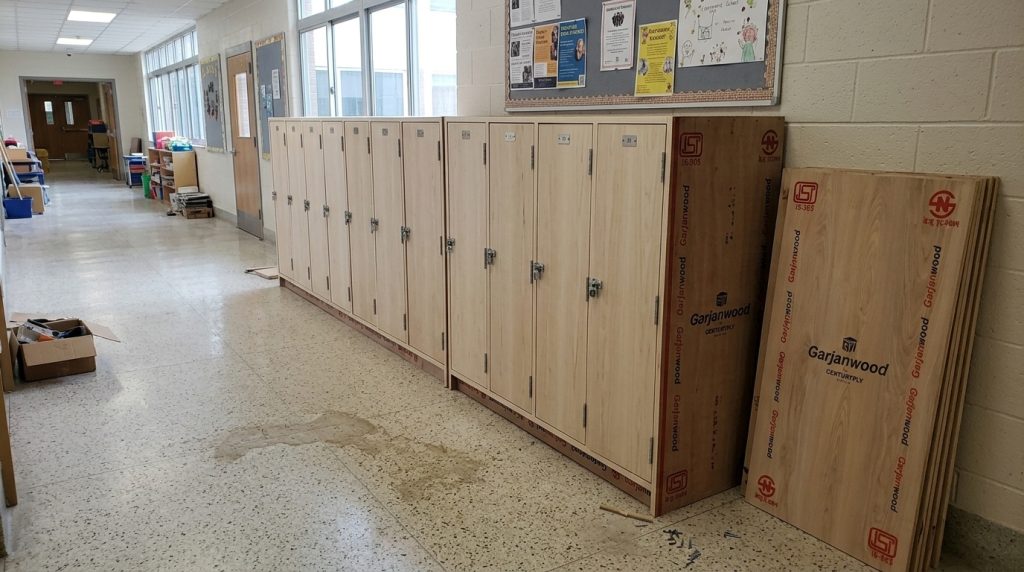
| Student lockers | 12 mm to 18 mm, BWP grade for damp areas | Strong door hinges and a solid back panel |
| Teacher’s desk and cupboards | 18 mm | Hold weight of files and equipment |
| Library shelving | 18 mm | Short spans, vertical dividers about every two to three feet |
| Hostel beds and wardrobes | 18 mm carcass, 6 mm back | Treat edges and bottom faces against floor moisture |
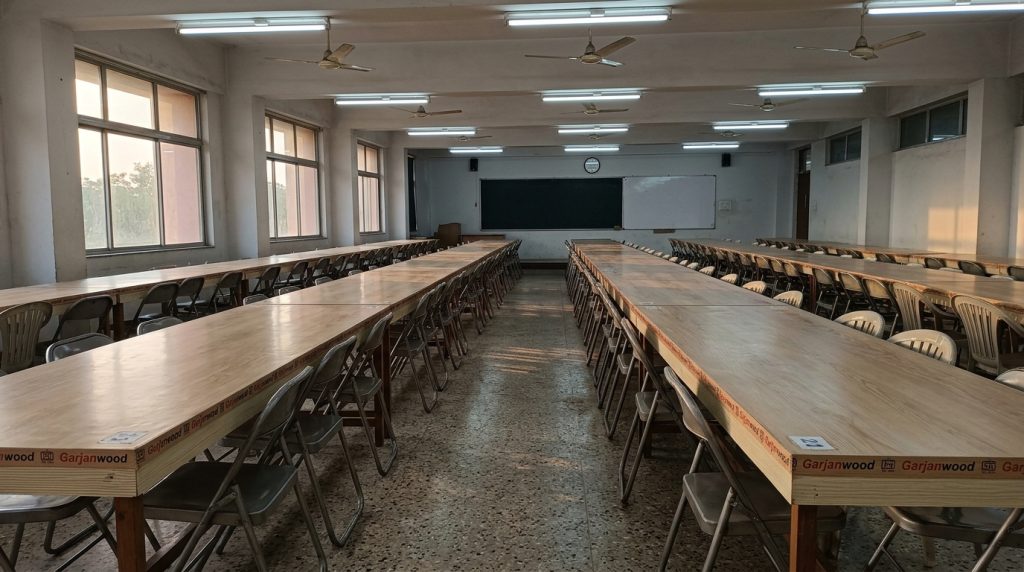
| Exam hall and coaching tables | 18 mm with laminate | Lightweight frames for easy rearranging |
| Lab bench tops (non chemical zones) | 18 mm with a durable laminate | Check the surface suits the experiments performed |
Choose boards with an even, void-free core. Hollow patches in cheap plywood weaken screw holding, which is exactly where school furniture fails first.
Size and Ergonomics: Furniture That Fits the Student
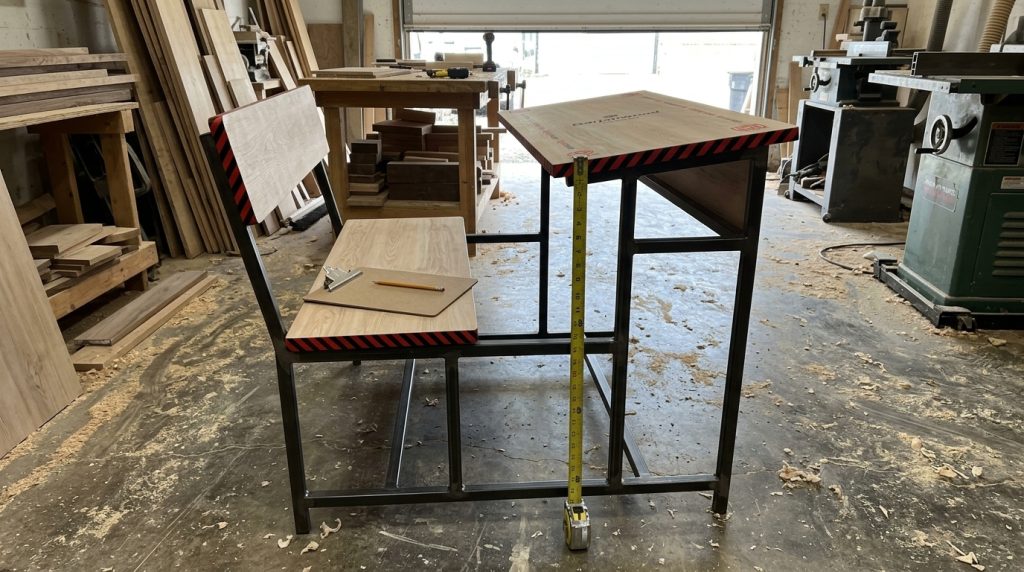
A desk that is the wrong height causes poor posture and fatigue. Typical planning ranges are shown below. They vary by country standard and by the actual students in your school, so always measure a sample group before finalising.
| Student group | Typical seat height | Typical desk height |
|---|---|---|
| Early primary | 11 to 13 inches | 21 to 24 inches |
| Upper primary | 13 to 15 inches | 24 to 27 inches |
| Secondary and coaching | 16 to 18 inches | 27 to 30 inches |
Ask your supplier to build a sample set first. Let a few students use it for a week before you approve the full order.
Safety Details That Matter
Children are rough on furniture, and safe design prevents injuries and complaints.
- Round every exposed corner, and apply edge banding so no raw plywood layers touch skin.
- Sand and seal all edges, which also protects against splinters and moisture.
- Use countersunk or concealed fixings, so no screw head or bolt end sticks out.
- Design a wide, stable base, so desks do not tip when a student leans or climbs.
- Avoid sharp metal brackets at knee and elbow height.
- Choose low odour finishes, and air new furniture before classes begin, especially for younger students.
Protecting Plywood in Wet and Dusty Conditions
School floors are mopped often, and monsoon rain gets tracked inside. Water rising from the floor is the biggest enemy of desk legs and locker bases.
- Seal bottom edges and faces with paint or sealer before assembly.
- Use plastic or rubber feet so plywood does not sit in contact with wet floors.
- Choose BWP grade for lockers, hostel furniture and ground floor classrooms in the Terai.
- Wipe laminate tops with a damp cloth, not a soaking wet one, and dry spills quickly.
- Keep spare panels indoors, flat and off the ground.
How to Order in Bulk Without Surprises
Large orders go wrong when the specification is vague. Follow this approach.
- Write a clear specification: thickness, grade, laminate type, edge treatment, dimensions, hardware and finish.
- Request a sample unit and test it for strength, finish and student comfort.
- Ask for the grade and certification in writing on the quote.
- Confirm that the entire order uses boards from the same batch, so colour and thickness stay consistent.
- Agree a delivery schedule that matches your academic calendar, and build in a buffer.
- Inspect on delivery, checking a sample of units against the approved sample.
- Ask about replacement parts so you can fix damage without buying whole units.
Many schools plan purchases before the new academic session begins around Baisakh, so enquire early to avoid the seasonal rush.
Maintenance Routine That Doubles Furniture Life
Good furniture still needs care. A simple routine keeps it in service for years.
- Weekly: Wipe tops and check for loose screws or hinges.
- Every term: Tighten bolts, touch up chipped edges and replace worn feet.
- Every year: Inspect lockers and hostel furniture for swelling or delamination near the floor, and repair early.
- Always: Keep a small stock of spare panels, hinges and edge banding.
A Nepal Climate Note
In the Terai, heat and humidity speed up swelling and mould, so sealing and grade choice matter most for ground floor rooms and hostels. In Kathmandu and the hills, cold winters mean sealed rooms and less airflow, so air new furniture well before use. Across the country, monsoon rain and mopped floors make bottom edge protection one of the cheapest ways to extend furniture life.
Quick Decision Box
Desk and bench tops: 18 mm with laminate and banded edges. Lockers and hostel furniture: BWP grade, sealed bottom edges, raised feet. Before a bulk order: approve a sample, confirm the grade in writing, order from one batch. For safety: rounded corners, concealed fixings, stable base.
Furniture Built for Many Years of Learning
When a school invests in furniture, it invests in every student who will sit there. Garjanwood by CenturyPly is manufactured at Century Ply Industries in Sunsari and is IS:303 certified, so your order starts with a recognised standard for board quality. Speak to your Biratnagar or Kathmandu dealer about samples and bulk supply, share your specifications, and equip your classrooms with furniture built for the long term.