

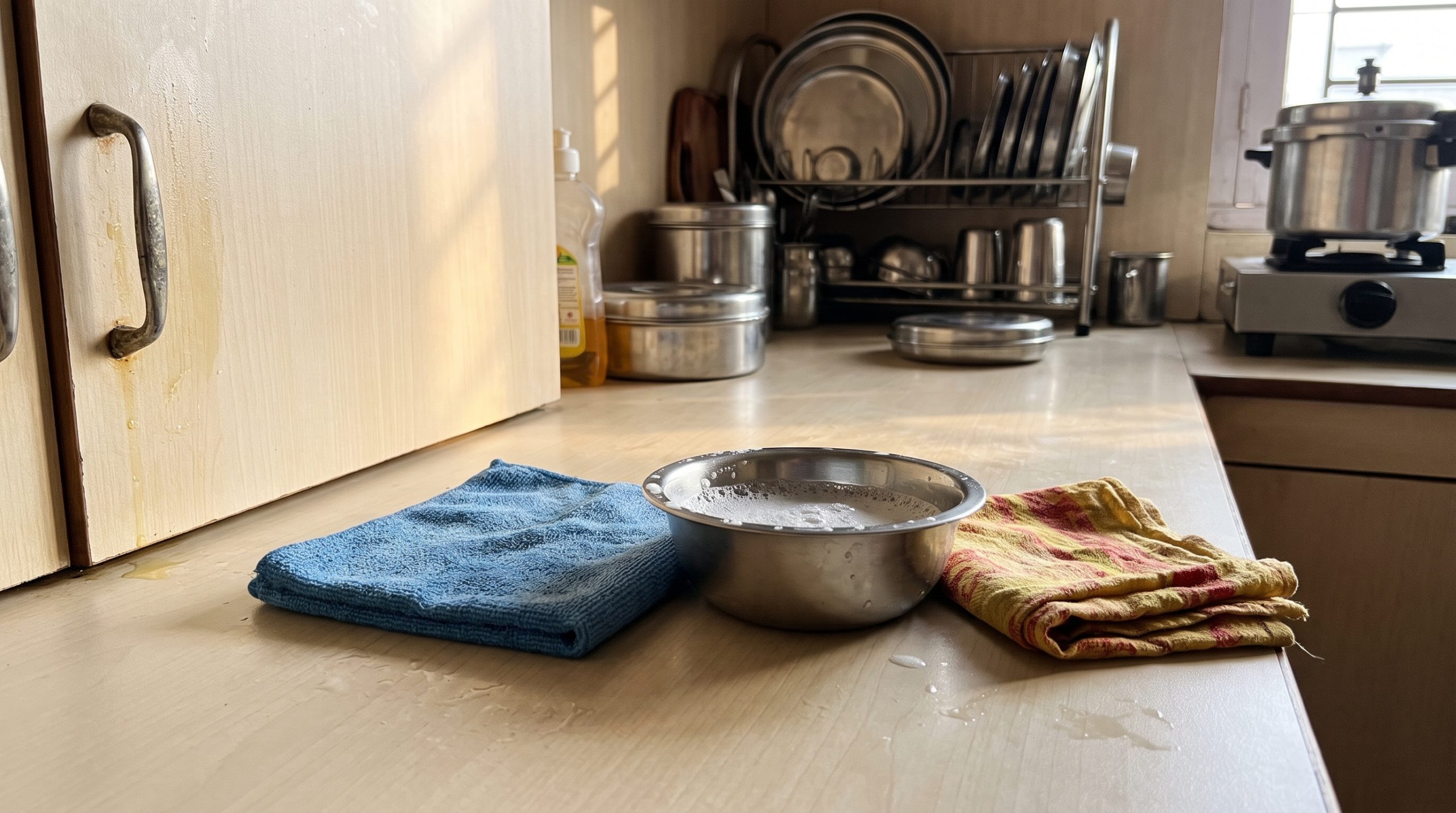
Most plywood furniture is not damaged by age. It is damaged by cleaning. A wet cloth left on a laminate edge, a harsh bathroom cleaner on a veneer door, or a hot pan placed on a tabletop can undo years of good carpentry in a single afternoon. Knowing how to clean plywood furniture properly is one of the cheapest ways to make it last. This guide explains what works for laminated surfaces, what works for veneered ones, which products and habits to avoid, and a simple routine you can follow weekly and monthly.
First, Know What Surface You Have
The plywood inside your furniture is usually covered with a decorative layer. How you clean depends on that layer.
- Laminate: a hard, thin sheet bonded to the plywood. It resists scratches and stains but can peel if water reaches the edges.
- Veneer: a thin slice of real wood glued over the plywood. It looks warm and natural but needs gentler care and sometimes polish.
- Paint or PU finish: a coating applied directly. It can chip and absorb stains if the coat is thin.
- Acrylic or high gloss panels: very smooth, show fingerprints and scratch easily.
If you are not sure, check the edge. A hard, plastic-like layer with a dark line underneath usually means laminate. Visible wood grain with fine lines that continue around the edge suggests veneer. Ask your carpenter if you are still unsure.
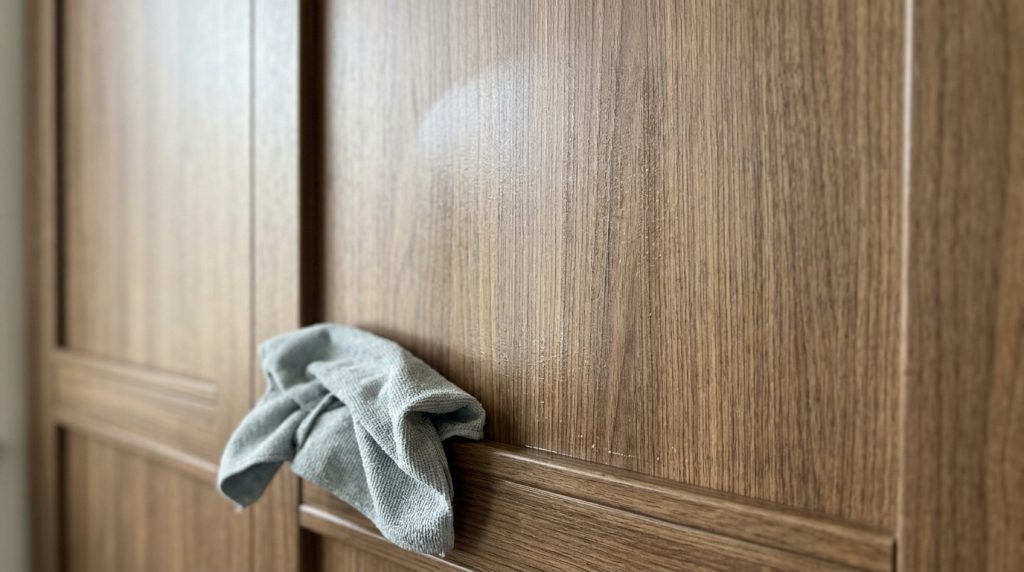
How to Clean Plywood Furniture: The Basic Method
For almost every finish, the basic routine is the same and uses things already in your kitchen.
- Dust first. Use a dry, soft cloth or a microfibre duster. Wiping a dusty surface with a wet cloth drags fine grit across the finish and causes scratches.
- Wipe with a lightly damp cloth. Dampen a soft cloth with plain water or a few drops of mild dish soap. Wring it out until it is nearly dry. Wipe in one direction, following the grain on veneer.
- Dry at once. Use a second dry cloth and wipe the surface immediately, paying attention to edges and corners.
- Finish if needed. On veneer, you can apply a small amount of furniture polish once every month or two, as directed on the label.
The key idea is simple: damp, not wet, and dry straight afterwards. Water is the enemy of plywood, as we explain in our guide to protecting plywood furniture from moisture.
What to Use and What to Avoid
| Product or habit | Laminate | Veneer | Why |
|---|---|---|---|
| Soft microfibre cloth | Yes | Yes | Gentle and traps dust |
| Mild dish soap in water | Yes | Yes, lightly | Removes grease without harming the finish |
| Furniture polish | Not needed | Occasionally | Adds shine to veneer, but too much builds up |
| Steam cleaner | No | No | Heat and steam lift edges and warp panels |
| Bleach, acid or strong bathroom cleaners | No | No | Strip colour and dull the surface |
| Acetone or nail polish remover | No | No | Dissolves finishes and glue |
| Scouring pads and steel wool | No | No | Leave permanent scratches |
| Soaked mop or dripping cloth | No | No | Water seeps into edges and swells the board |
If a stain does not come off with soap and water, do not escalate to stronger chemicals straight away. Test any new product on a hidden corner first and wait a day to see if it affects the surface.
Dealing with Common Stains
Grease and cooking splashes. Wipe with mild soapy water. For old grease on kitchen laminate, a paste of baking soda and water on a soft cloth can help. Rub gently, rinse with a damp cloth and dry.
Tea, coffee and ink. Wipe quickly while fresh. If a mark remains on laminate, a cloth with a little diluted white vinegar can lift it. Do not use this on veneer, as it can dull the surface.
Water rings and hot marks. On veneer, these happen when hot cups or wet glasses sit on the surface. Prevention is easier than repair, so use coasters. For light marks, a gentle rub with a soft cloth and a little furniture polish may help. Deep marks usually need a professional touch-up.
Sticky residue from tape or stickers. Warm the spot slightly, peel gently, and wipe the glue with a cloth dipped in a little cooking oil. Then wash with mild soap and dry.
Mould or mildew spots. Wipe with a mild soap solution and dry thoroughly. If it returns, the problem is dampness in the room, not the cleaning method.
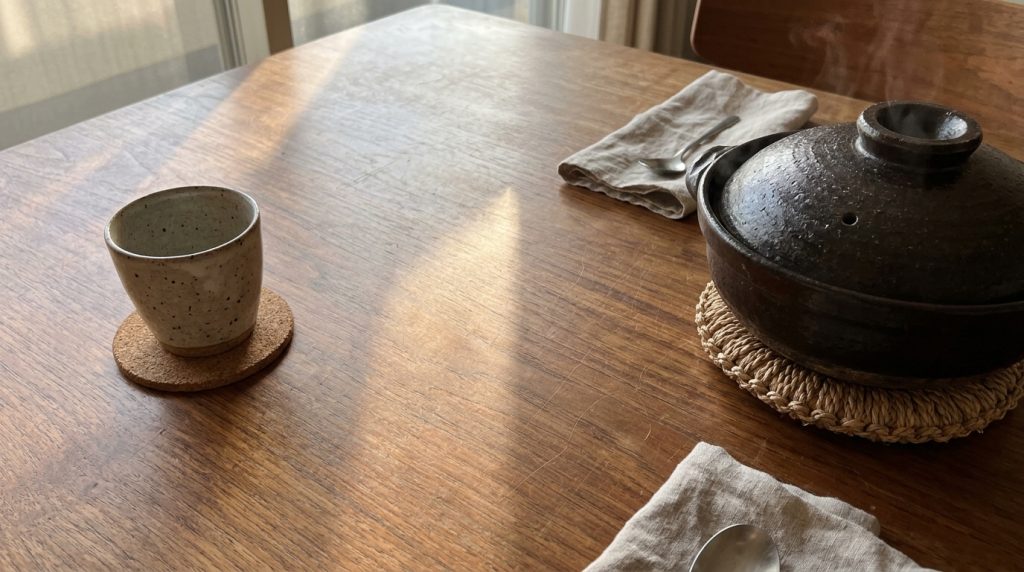
Daily Habits That Protect the Finish
Cleaning is only half the story. These daily habits decide how long your finish looks fresh.
- Use coasters under cups and bottles, and trivets under hot pots.
- Wipe spills straight away rather than leaving them for later.
- Lift items instead of dragging them across surfaces.
- Place felt pads under decorative objects and lamp bases.
- Keep furniture out of long, direct sunlight, which fades veneers and dulls laminates.
- Do not sit or stand on tabletops, shelves or low cabinets.
- Open and close doors by the handle, not by the edge, so the banding stays glued.
Weekly, Monthly and Seasonal Routine
A simple schedule keeps work light.
Weekly: dust all surfaces with a dry cloth, wipe kitchen cabinet fronts and handles with a damp cloth, and dry.
Monthly: wipe the inside of wardrobes and drawers, check edges and corners for lifting laminate, and tighten loose handles and hinges.
Before and after the monsoon: open every door and drawer, check lower panels for swelling, and inspect edges. If you see a chipped edge, follow our steps to seal plywood edges.
Yearly: clean behind and under furniture, check for signs of pests, and re apply polish on veneer if needed.
Special Care for Kitchens and Bathrooms
Kitchen and bathroom furniture faces steam, grease and splashes every day. Use an exhaust fan or open a window when cooking, wipe cabinet doors after meals, and avoid hanging wet cloths on handles. In bathrooms, wipe splashes from vanity tops straight away and keep doors slightly open to let steam out. If you want to know which boards suit wet areas, read our post on waterproof plywood.
Quick Decision Box
| Situation | What to do |
|---|---|
| Dusty veneer wardrobe | Dry cloth first, then slightly damp cloth with the grain, then dry |
| Greasy kitchen laminate | Mild dish soap, rinse cloth, dry, repeat if needed |
| Peeling corner | Stop wet cleaning, dry, then reglue (see our fixing guide) |
| Hot cup mark on veneer | Try gentle polish, call a pro for deep marks |
A Note on Nepal’s Climate
In the Terai, dust, humidity and cooking oil make a weekly wipe routine especially useful, and drying with a second cloth is essential. In Kathmandu and the hills, winter dryness and strong sun through windows can fade veneers, so curtains help. Across the country, placing room heaters, lamps or hot appliances too close to furniture can scorch surfaces, so keep a safe distance. For a deeper look at how climate affects materials, see our guide on Terai humidity and termites.
Frequently Asked Questions
Can I use a wet mop near furniture? Avoid it. Wet mops splash the lowest panels, which are the first to swell.
How often should I polish veneer? Once every one or two months is plenty. Too much polish leaves a greasy build up.
Can I clean plywood with vinegar? Diluted vinegar works for some laminate stains, but not for veneer or painted surfaces.
A Strong Base Makes Cleaning Easier: Garjanwood by CenturyPly
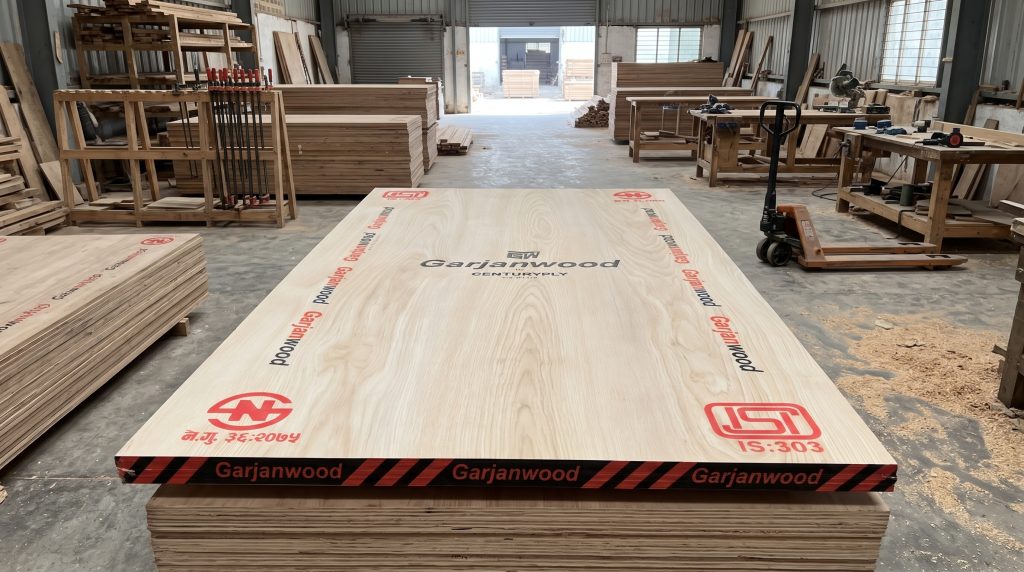
A quality core under your laminate or veneer makes all this care count for more. Garjanwood by CenturyPly is manufactured at Century Ply Industries in Barju, Sunsari, and is IS:303 certified. Spot it by the pale cream Garjan grain, the red and black diagonal edge band with the Garjanwood name, and the red IS:303 stamps at the corners. Use it as the base of your furniture, follow the care routine above, and your finish will look good for years. Explore more at centuryplynepal.com.