

IS:303 is stamped on plywood across Nepal, but what does it actually certify? Here’s what buyers should check before trusting the label.
You’ve Seen the Stamp. Do You Know What It Means?
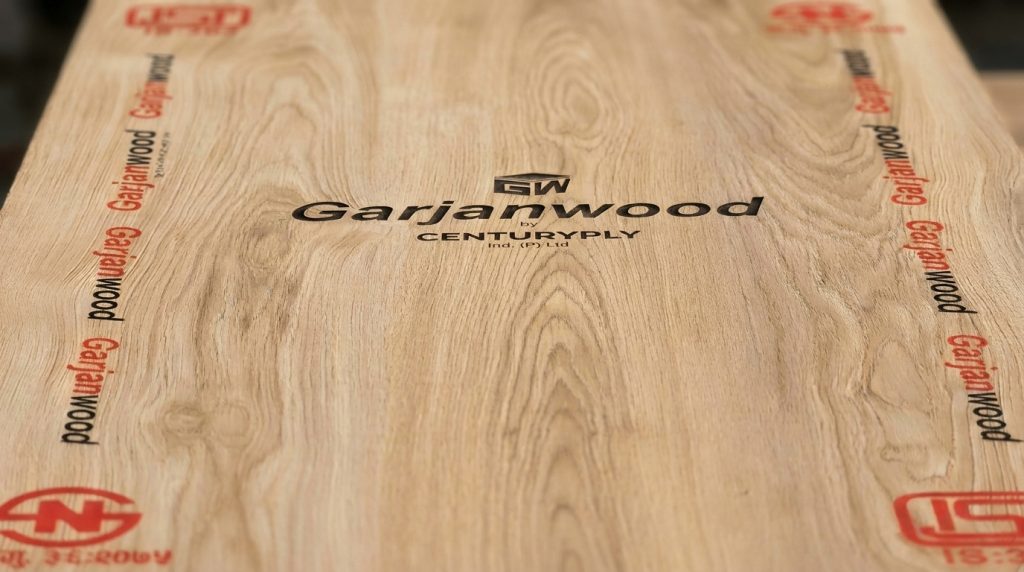
Most buyers have seen the red circular stamp in the corner of a plywood sheet without knowing what it actually certifies. It’s treated as a general seal of trust, a mark that says “this is proper plywood,” but it has a specific, technical meaning that most sales counters never explain.
A Quick Bit of History
IS:303 comes from the Bureau of Indian Standards, the body that sets manufacturing specifications across a huge range of products in India, plywood included. The standard has been revised more than once since it was first introduced, each time tightening requirements around veneer quality and bonding strength. Because so much plywood sold in Nepal is either manufactured to Indian specifications or made by companies with Indian manufacturing roots, IS:303 has effectively become the reference standard here too, even though it’s not a Nepali regulatory requirement.
What IS:303 Actually Certifies
IS:303 is the Indian Standard specification for plywood for general purposes. It covers MR (Moisture Resistant) and BWR (Boiling Water Resistant) grades, setting requirements for veneer quality, thickness tolerance and how well the bonding holds up under moisture testing. Fully waterproof marine grade plywood, commonly labeled BWP, is tested to a separate standard, IS:710, which involves prolonged boiling water exposure, typically well beyond what IS:303 testing requires. Knowing this distinction matters: a sheet stamped IS:303 is not automatically the same as a fully waterproof BWP sheet, and assuming otherwise is one of the most common mistakes buyers make at the counter.
MR vs BWR: The Difference Most Buyers Miss
Even within IS:303 itself, there are two distinct grades that get lumped together in casual conversation.
- MR (Moisture Resistant) uses urea formaldehyde resin, resists everyday humidity, but is not built for direct or repeated water contact
- BWR (Boiling Water Resistant) uses a stronger phenolic-based resin, holds up to steam and occasional spills, and sits a step above MR in both durability and price
Neither one is “waterproof” in the way BWP is. Both are IS:303 grades, but they behave very differently once real moisture gets involved, which is exactly why the specific grade matters more than the standard number alone.
IS:303 vs IS:710 Side by Side
| IS:303 | IS:710 | |
|---|---|---|
| Grades covered | MR, BWR | BWP (marine/boiled water proof) |
| Resin type | Urea formaldehyde (MR) or phenolic (BWR) | Undiluted phenol formaldehyde |
| Water exposure tested | Moderate humidity to occasional water contact | Prolonged boiling water exposure |
| Typical use | Everyday indoor furniture | Kitchens, bathrooms, ground floor, exterior-adjacent |
Why the Stamp Alone Isn’t Proof
A printed stamp can appear on packaging without the batch ever being tested against it. Genuine certification means the specific batch met the bonding and moisture resistance requirements for its grade, not that the brand simply printed a logo on the edge. This is exactly where buyers get misled, since a stamp looks the same whether it’s backed by real testing or just good printing. A shop can sell a sheet with a confident-looking stamp and no buyer at the counter has an easy way to check it on the spot, which is why the questions you ask matter more than the sticker itself.
How to Verify Before You Buy
- Ask the dealer which specific grade the sheet is tested to: MR, BWR under IS:303, or BWP under IS:710
- Check that the stamp appears consistently on all four corners, not just one, since inconsistent stamping is a common shortcut
- Ask for warranty documentation, not just a verbal assurance from the sales staff
- Buy from brands with a traceable factory, so the certification claim can actually be followed back to a source
- Ask how the batch was tested, and whether the dealer can show any batch documentation, not just the printed stamp
- Compare the stamp against a known genuine sample if you have any doubt, since fonts and stamp quality can differ
Final Thought
The stamp is a starting point for a conversation with your dealer, not the end of one. Knowing what it covers, and what it doesn’t, is what actually protects your purchase, far more than the stamp itself ever could.