

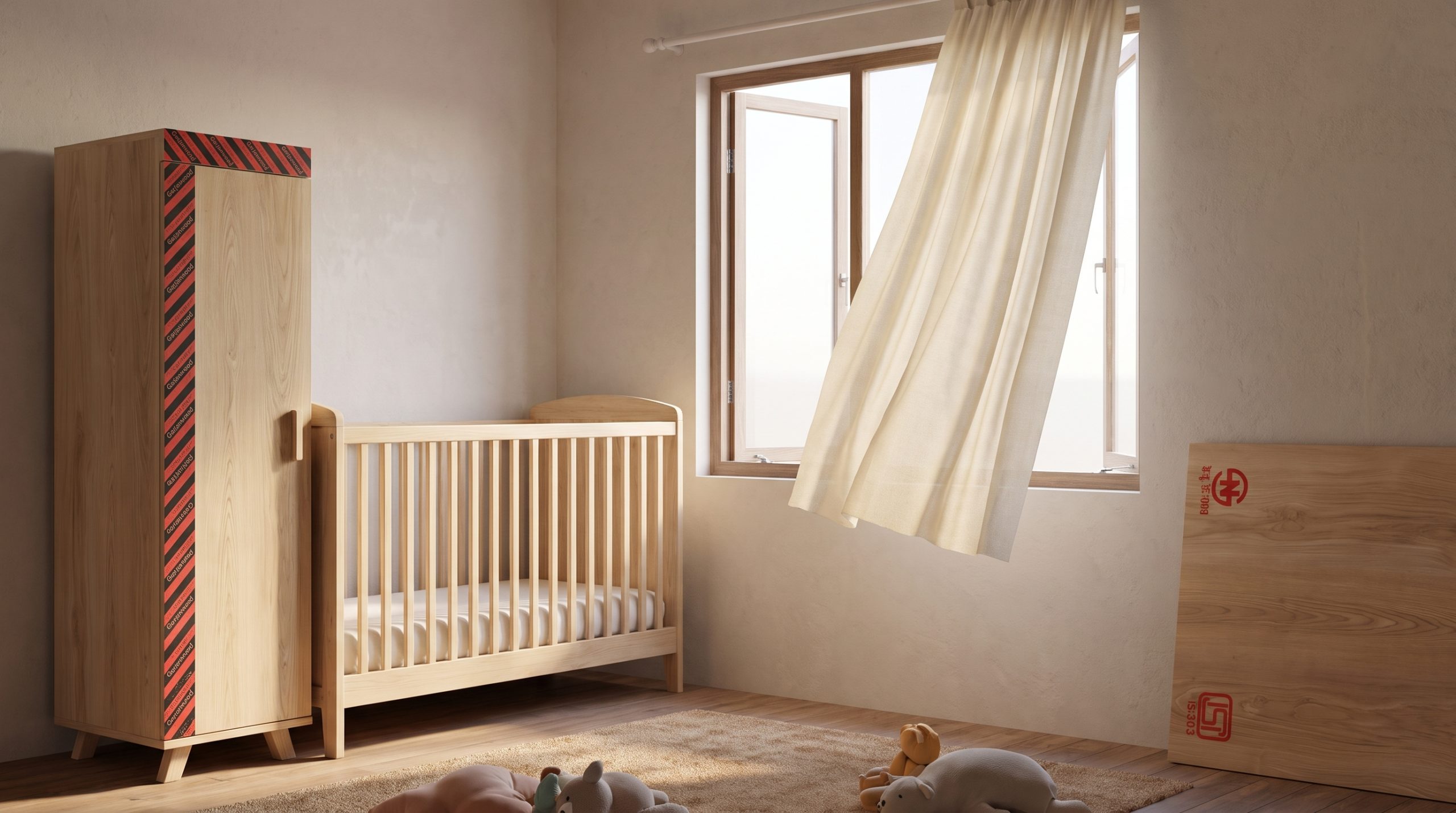
Setting up a nursery is full of small decisions, and one question worries many parents: is the new plywood cot, wardrobe or shelf actually safe to have next to a sleeping baby? The honest answer is that it depends on the glue, the finish and how you air the room. This guide explains why plywood formaldehyde safe is a fair question, what really matters, and what you can do at home, in simple language.
This article is general information, not medical advice. If you have concerns about your child’s health, speak to a paediatrician.
Why Parents Ask About Plywood and Formaldehyde
Formaldehyde is a chemical used in some wood adhesives. Small amounts can be released into indoor air as a gas, especially from new boards in warm, closed rooms. At higher levels, it can irritate the eyes, nose and throat. Babies spend a lot of time in one room and breathe more air relative to their body size, so careful parents prefer to keep indoor air as clean as possible.
The good news is that this is manageable. Not all plywood behaves the same, and a few smart choices reduce exposure considerably.
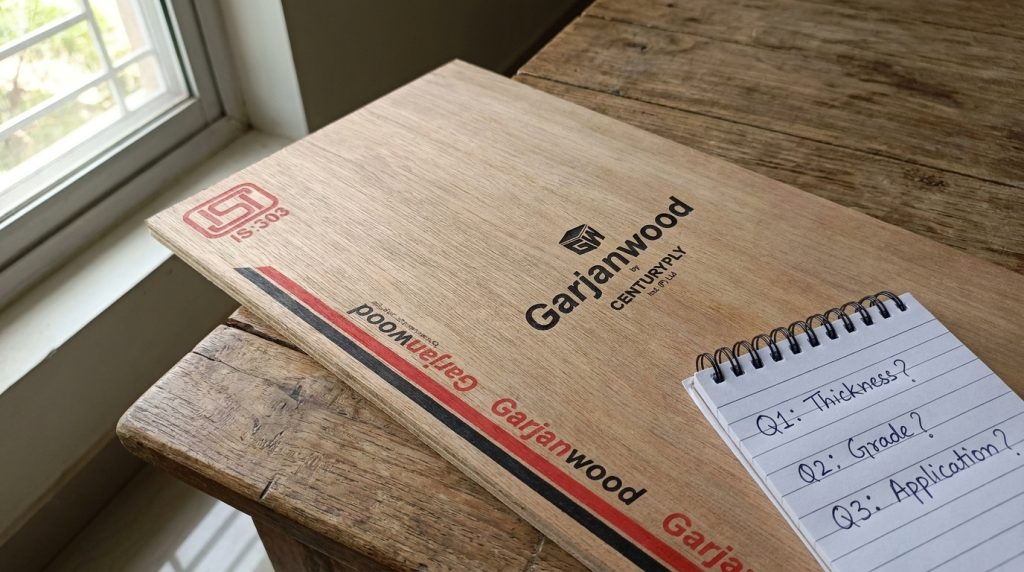
Where Emissions Come From
Plywood is made by bonding thin veneers with adhesive under heat and pressure. The adhesive type largely decides how much gas the finished board can release. Emissions are highest when a board is new, warm and uncoated, and they usually fall over time as the board airs out.
Glue Types Compared
| Adhesive type | General emission tendency | Typical use |
|---|---|---|
| Urea formaldehyde | Generally higher, less moisture resistant | Interior boards, lower cost products |
| Melamine urea formaldehyde | Moderate, better moisture resistance | Mid range interior and some water resistant boards |
| Phenol formaldehyde | Generally lower emissions, strong and water resistant | Boiling water proof (BWP) grades, exterior and demanding use |
These are general tendencies, and actual emissions depend on the specific product and how it was made. A board bonded with phenolic adhesive is usually a more reassuring choice for family spaces, but the only way to be sure about a particular board is to ask for documentation.
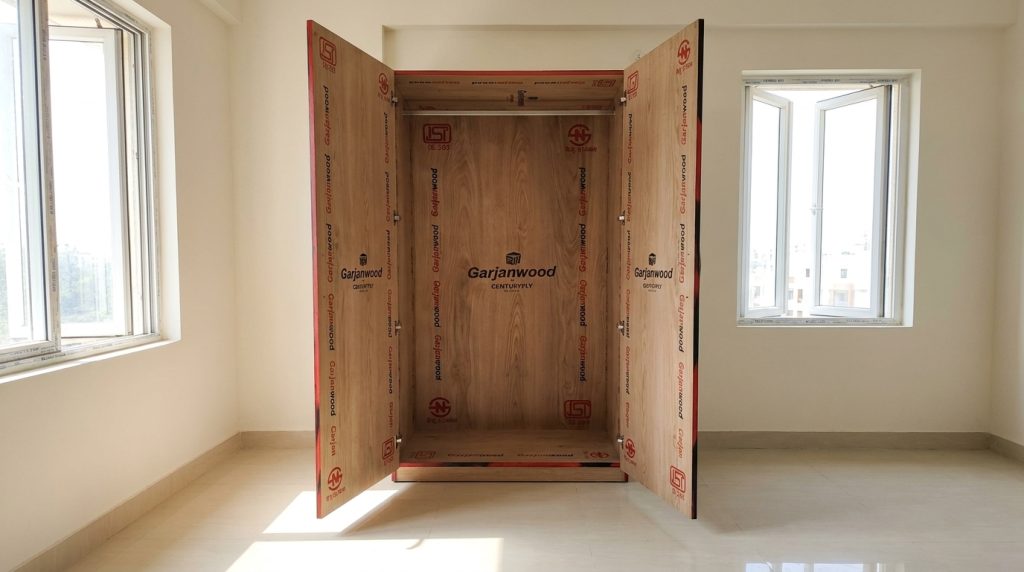
What to Ask Your Dealer or Carpenter
Do not feel awkward asking. Reputable suppliers expect these questions.
- What type of adhesive was used in this board?
- Is there an emission class or test report for this grade?
- What does the certification on the board actually cover? (Ask whether it addresses emissions, or only bond and performance.)
- Is this a boiling-water-proof grade?
- How should I finish and air it before use?
If the answers are vague, treat that as information. A clear, confident reply is a good sign.
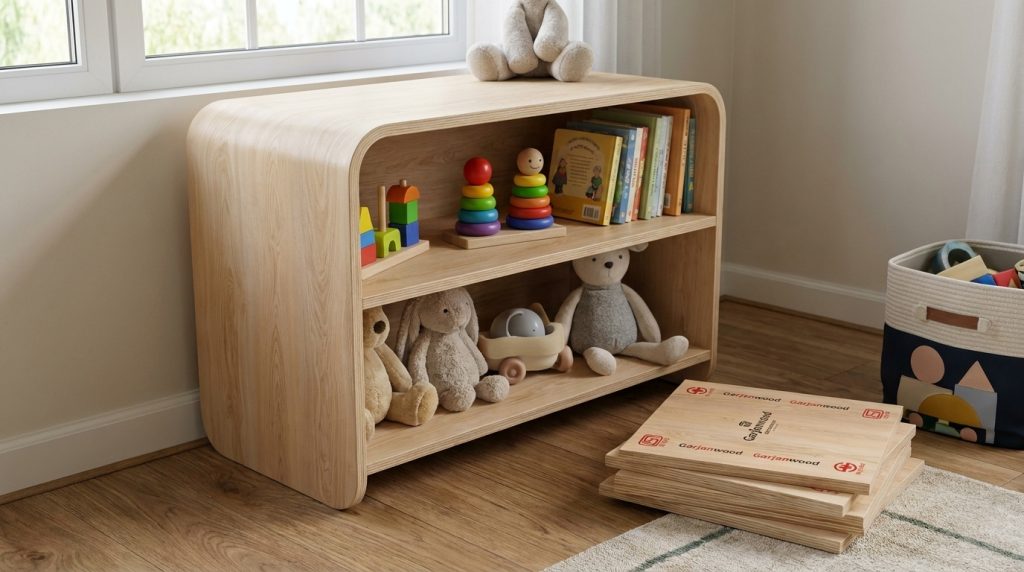
Ventilation: The Biggest Everyday Lever
Even low-emission boards benefit from airing. Good ventilation is the simplest, cheapest protection.
- Air new furniture before the baby moves in. Keep windows open for several days, ideally in a spare room or covered veranda first.
- Do not stack new paint and new furniture in the same week. Paint fumes add to indoor air load, so space the work out.
- Create cross ventilation. Open windows on opposite sides so air actually moves through the room.
- Keep the room cool. Heat increases emissions, so avoid placing new boards near heaters or in sealed, sun-heated rooms.
- Continue airing daily during the first weeks after setup.
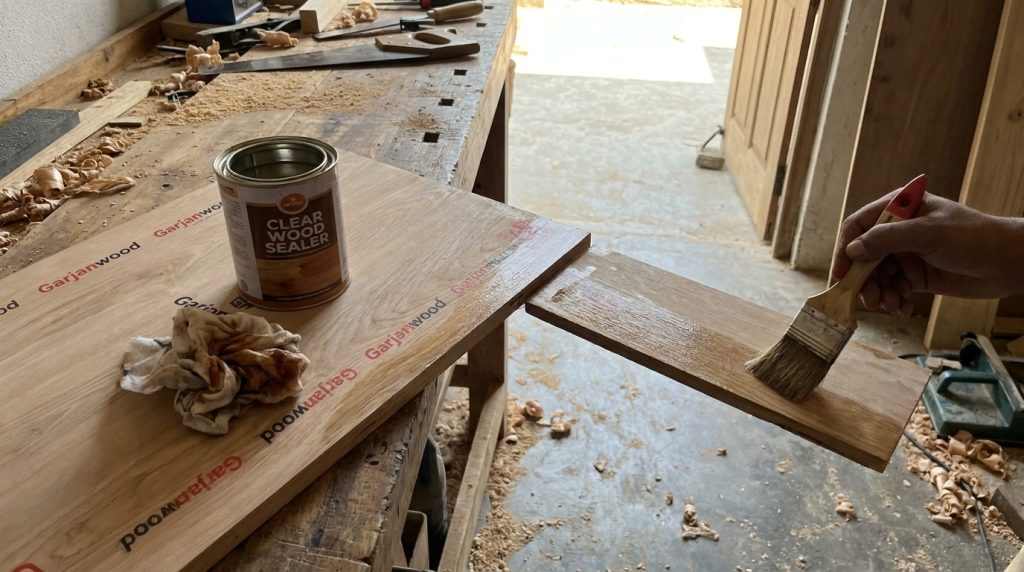
Finishing and Sealing Choices
A good finish does two jobs: it protects the board and reduces what escapes from it.
- Seal all faces and edges, including the back and inside of drawers, not only the visible side.
- Choose a low-odour, water-based paint or lacquer where possible, and let it cure fully before the room is used.
- Use quality laminate or veneer with proper edge banding, which closes off exposed edges.
- Avoid raw, unfinished plywood in places where a baby might mouth or chew the surface.
Practical Layout Tips for a Nepali Nursery
- Place the cot away from fresh paint and new, unaired cabinetry.
- Keep wardrobes and storage as a separate piece, not a built-in wall of fresh boards right behind the cot.
- Choose smooth, rounded edges and stable construction, because safety also means strength and finish, not only air quality.
- Keep the room clean and dust-free, since dust carries irritants of its own.
A Nepal Climate Note
In Kathmandu’s cold months, families tend to close windows tightly, which traps indoor air. Even in winter, open windows briefly in the sunniest part of the day to refresh the room. In the Terai summer, heat and humidity speed up emissions and encourage mould, so ventilation and dry storage matter even more. In either climate, avoid moving brand new furniture into a sealed room and shutting the door.
Quick Decision Box
Safer choices: phenolic bonded (BWP) boards, sealed on all faces, with documented emission information. Before the baby arrives: air furniture for several days, keep windows open, avoid fresh paint nearby. Always ask: adhesive type, emission class, and what the certification covers.
Choose Boards You Can Ask Questions About
Peace of mind comes from knowing what is in your home. Garjanwood by CenturyPly is made at Century Ply Industries in Sunsari and is IS:303 certified. Ask your Biratnagar or Kathmandu dealer about the right grade for family rooms, request the product documentation, and plan finishing and airing carefully, so the room you build for your baby is as comfortable as it is beautiful.