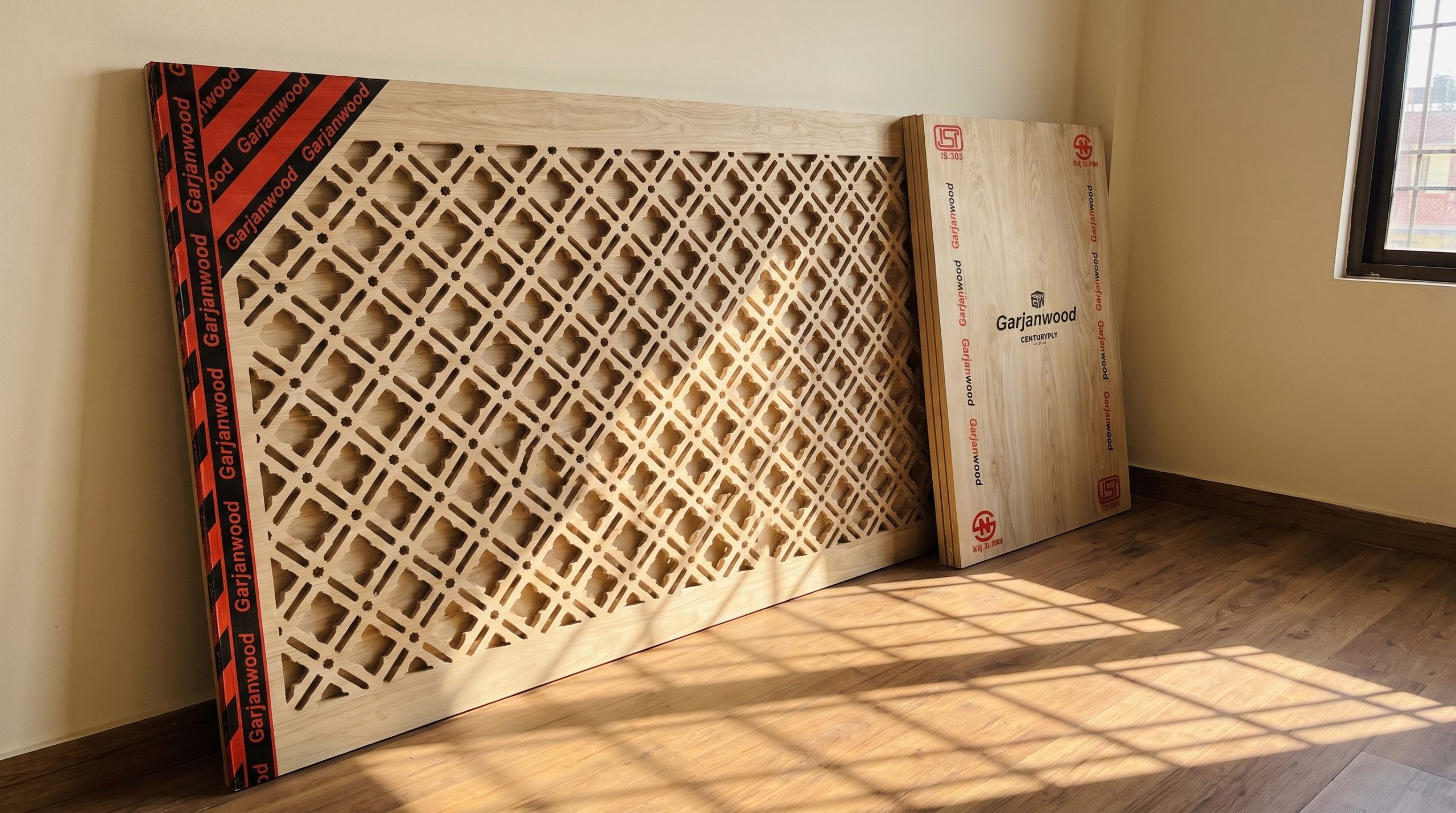
Walk through Bhaktapur or Patan, and you will stop at a window. The carved lattices, the layered frames and the peacock motifs are some of the most recognisable craftsmanship in Nepal. Many homeowners and designers now want that character inside new apartments, cafes and homestays, but solid carved hardwood is expensive and slow to produce. That is where Newari window design plywood comes in: a way to bring the spirit of the pattern into modern spaces with CNC routing, without pretending to replace the master carver.
Why Newari Windows Inspire Modern Interiors
Traditional Newari windows are more than openings. They frame light, offer privacy while letting air through, and carry symbolism in every repeated motif. Designers love them because the geometry is strong and the patterns are already proven to look good in sunlight and shadow.
In modern Nepali interiors, the same ideas work in new places: a partition screen between a living and dining area, a headboard wall in a bedroom, kitchen shutters, a reception backdrop in a hotel or homestay, or a lit panel behind a prayer corner. A carved plywood panel can give a room the feel of heritage while staying practical for a flat in Kathmandu or a new house in Biratnagar.

Traditional Carving vs CNC Plywood
These are two different crafts with different jobs. It helps to understand the trade-offs before choosing.
| Factor | Hand carved solid hardwood | CNC routed plywood |
|---|---|---|
| Craft value | Highest, unique to the carver | Reproducible, design led |
| Speed | Slow, weeks for a large window | Fast once the file is ready |
| Cost | High | Much lower for repeat patterns |
| Dimensional stability | Can move with moisture | Stable, layered construction |
| Best use | Heritage restoration, temples, statement pieces | Interior partitions, wall panels, furniture, commercial fit outs |
The honest position is that CNC plywood does not replace traditional work. For restoration and heritage buildings, skilled Newari craftspeople remain essential. CNC plywood makes sense when you want the visual language in contemporary spaces at a price and speed that modern projects need. A good approach is to collaborate: a traditional artisan designs or approves the motif, and the CNC shop produces it in plywood.
Motifs That Translate Well to Plywood
Not every detail suits routing. These work especially well:
- Lattice screens inspired by tiki jhya style windows: Repeating geometric cutouts that cast beautiful shadows.
- Peacock-inspired panels: Flowing bird and feather forms, best used as a single focal panel.
- Eye window concepts inspired by ankhi jhyal: A bold circular or oval shape works as a framed feature.
- Lotus and floral borders: Gentle repeating curves suitable for cabinet doors and headboards.
- Layered frame profiles: Stepped borders built with multiple plywood layers glued up for depth.
Very fine, thin details are risky. The cutter has a minimum size, so narrow bridges between cutouts can snap. Ask your CNC operator for their minimum bit size before finalising a design.
Choosing Plywood for CNC Carving
The board matters as much as the design. A routed pattern exposes the inner layers, so quality shows immediately.
- Thickness: 18 mm is a strong starting point for screens and doors, as it carries the pattern without flexing. For deeper relief carving, consider thicker boards or glue up two layers.
- Even, void-free core: Gaps inside cheap plywood show up as chipped or hollow patches when the cutter passes through.
- Consistent glue lines: Weak bonding causes layers to lift along the cut edge.
- Smooth, uniform surface: Fine sanding later is easier, and the finish looks richer.
Ask for a trial cut on an offcut before committing to the entire order. It costs little and shows you exactly how the board behaves under the router.

Preparing the Design File
Most problems start before the machine runs.
- Draw clean vector lines. Avoid tiny curves and overlapping paths.
- Keep bridges thick enough. Leave solid sections between cutouts, usually a few millimetres more than you think you need.
- Round inside corners slightly. A round cutter cannot make perfectly sharp inside corners.
- Plan grain direction. Cut so the stronger face grain runs along the longest span.
- Add registration marks and numbering. For multi-panel designs, number each piece for easy assembly.
Finishing: Where the Heritage Look Comes Alive
Raw routed plywood looks plain. Finishing is what turns it into a convincing piece.
- Sand all cut edges until smooth, so the pattern feels crisp, not fuzzy.
- Seal with a primer or sealer to stop the surface drinking up stain unevenly.
- Choose a tone with intent: Deep walnut and teak tones suggest traditional timber. Soft white or pastel finishes feel modern. Muted red and ochre colours nod to temple and festival palettes.
- Add a protective top coat suitable for the room, with extra care in kitchens and bathrooms.
- Backlight selectively. A strip of warm LED behind a lattice panel creates the shadow play that makes these designs special.
A Respectful Note on Heritage
Newari windows are living cultural heritage. When using their motifs commercially, credit the tradition, avoid reducing sacred symbols to cheap decoration, and where possible work with traditional craftspeople. Using these designs thoughtfully strengthens the craft by keeping the visual language alive and valued in new homes.
Nepal Climate Note
In the Kathmandu Valley, dry winters and damp monsoons mean panels should be sealed on all faces, including the back, so moisture cannot enter unevenly. In the Terai, where humidity is higher for longer, seal edges and cut surfaces carefully and keep panels away from direct water. In both regions, allow plywood to settle in the room for a few days before final installation.
Quick Decision Box
Choose CNC plywood if: you want Newari-inspired design in a modern interior, with repeatable patterns and a sensible budget. Choose hand-carved hardwood if: you are restoring a heritage structure or want a one-of-a-kind masterpiece. For best results: 18 mm void-free plywood, a trial cut, thick bridges, sealed finish.
Start with a Board Worth Carving
Fine patterns deserve a fine base. Garjanwood by CenturyPly is manufactured at Century Ply Industries in Sunsari and is IS:303 certified, with a pale cream ivory grain that takes stain, paint and clear finishes beautifully. Talk to your Biratnagar or Kathmandu dealer about the right thickness for your design, and bring a little of Nepal’s craftsmanship home.