


Most people planning a modular kitchen ask the carpenter one question: which plywood is best? It is the wrong question. A kitchen is not one uniform environment; it is several different zones with completely different stress levels, and using the same grade everywhere means you are either overpaying in some cabinets or under-protecting others.
The sink base unit and the overhead shutter above the stove do not face the same conditions. Treating them the same is how kitchens end up with a swollen base cabinet at year three while the upper shutters, built to the same expensive spec, sit there barely used and overpriced.
Here is how to actually think about it, zone by zone.
Why Zone Matters More Than “Best Grade Overall”
Every modular kitchen has three rough categories of exposure: constant water contact, occasional moisture and steam, and mostly dry. Matching plywood grade to exposure level is what protects your cabinets without inflating your budget on parts of the kitchen that will never see a drop of water.
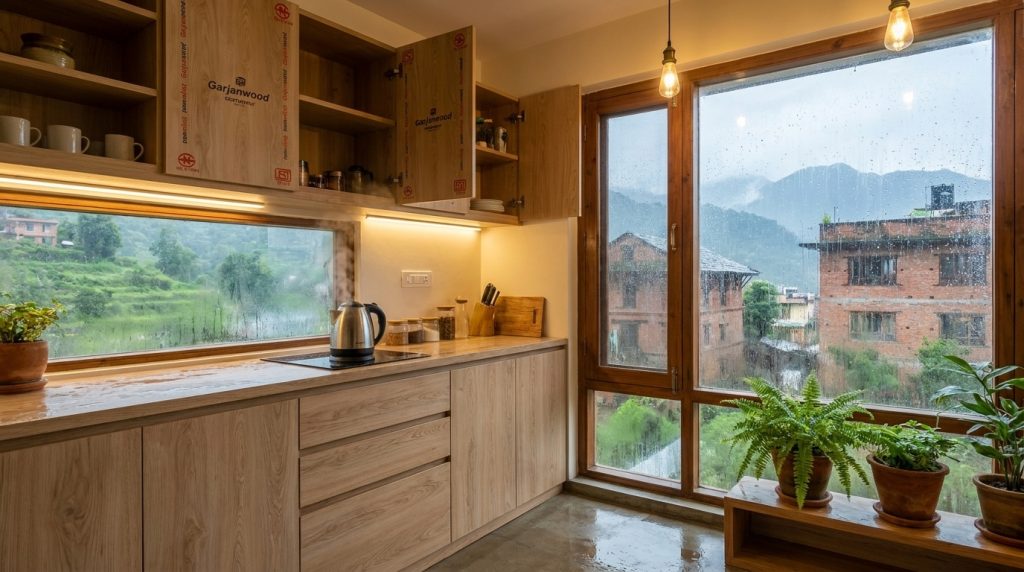
Zone-by-Zone Grade Guide
| Kitchen Zone | Recommended Grade | Why |
|---|---|---|
| Sink base unit and under-sink storage | BWP (Boiling Waterproof) | Constant water contact, splashes, leaks, this zone cannot compromise |
| Main cabinet framework and carcass | BWR (Boiling Water Resistant) | Handles daily steam and humidity without the full BWP cost |
| Overhead shutters and dry upper cabinets | MR (Moisture Resistant) | Rarely touched by water, no need to overspend here |
| Countertop backing and stove-adjacent panels | BWP, fire-retardant treated | High heat and occasional splashes, safety matters near open flame |
| Drawer boxes and interior liners | BWR, thinner gauge | Frequent handling but lower direct water exposure |
Sink Base Units: No Exceptions
This is the one zone where cutting corners always costs more later. The area under and around the sink deals with direct water contact, leaks from pipe joints, and standing moisture if a spill isn’t wiped up quickly. BWP grade plywood, tested to withstand prolonged boiling water exposure, is the only sensible choice here. Anything less and you are looking at swollen cabinet bases within a couple of monsoons.
General Cabinet Framework: BWR is the Practical Middle Ground
For the bulk of your kitchen carcass, the structure that holds everything together but isn’t in direct water contact, BWR grade strikes the right balance. It resists the steam and humidity that build up during daily cooking without the added cost of full waterproof grade everywhere.
Overhead Shutters: MR is Genuinely Enough
Upper cabinets rarely see water beyond the occasional splash while reaching for something. Paying BWP prices for shutters that stay dry ninety percent of the time is money better spent elsewhere in the kitchen, or saved altogether. MR grade plywood, finished with a good laminate, holds up fine in this zone.
Countertop Backing and Stove-Adjacent Panels
Zones near the cooktop deal with heat, occasional oil splatter, and the risk of open flame nearby. Beyond moisture resistance, fire-retardant treated plywood adds a real safety margin here, particularly for panels close to burners or electrical points.

A Common Mistake to Avoid
Two mistakes show up constantly in Nepali kitchens. The first is using MR grade throughout to save money, which leaves the sink area vulnerable and leads to early replacement. The second is using BWP everywhere out of caution, which is safe but unnecessarily expensive for zones that were never at risk. Mapping grade to zone, the way outlined above, is how you avoid both.
A Note for Kathmandu and Terai Kitchens
Kitchens in Kathmandu Valley and across the Terai deal with genuine humidity swings during monsoon, on top of daily cooking steam. That combination means even the “dry” zones in your kitchen see more moisture over a year than a similar kitchen in a drier climate. If your kitchen faces a courtyard, gets limited ventilation, or is on a ground floor, it’s worth stepping up from MR to BWR even in the upper cabinets. For the full breakdown of what separates each grade, see our detailed guide on BWP vs BWR plywood.
The Bottom Line
Walk your kitchen layout before you order anything. Mark which cabinets sit near water, which face daily steam, and which stay dry, then match the grade to each zone rather than picking one grade for the whole kitchen. It protects the parts that need it and saves you money on the parts that don’t.
Garjanwood’s plywood range, manufactured at Century Ply Industries in Barju-01, Sunsari, covers MR, BWR, and BWP grades, each carrying the IS:303 certification stamp at all four corners. Visit our dealer locations in Biratnagar or Kathmandu (Gyaneshwar) and ask for a zone-by-zone recommendation before you finalize your kitchen order.