
Most plywood scams in Nepal are not sophisticated. They do not need to be. They rely on a simple gap: the buyer commits money, time, or trust before they can actually see, touch, or verify what they are paying for. That gap has always existed with contractors and middlemen, but it has widened further as more renovation shopping moves online, through Daraz listings, Facebook Marketplace posts, and WhatsApp-forwarded catalogs. This post covers the two most common ways homeowners lose money on plywood before a single sheet is delivered, and the specific habits that close the gap.
Part One: The Online Marketplace Trap
Why This Is Growing
Nepal’s online shopping habits have shifted fast. Daraz has become a normal place to compare furniture and hardware prices, and Facebook Marketplace groups for Biratnagar, Kathmandu, and other cities are full of renovation-related posts, from individual sellers to small resellers. This is convenient, and often genuinely useful for comparing prices. But plywood is a physical-inspection product. Grade, thickness consistency, core quality, and even the authenticity of a certification stamp are things a photo simply cannot prove.
The Common Pattern
A listing shows a clean, well-lit photo of plywood sheets with a certification stamp visible. The price looks slightly better than the local dealer’s rate. The seller responds quickly, is friendly, and pushes for a partial or full payment “to hold the stock” or “to start the delivery process.” Once payment is made, one of three things typically happens:
- The seller stalls on delivery indefinitely, citing transport delays, while continuing to promise updates.
- The delivered plywood does not match the listing, thinner than advertised, a different grade, or unmarked sheets with no visible certification at all.
- The seller disappears entirely, and the marketplace account often goes silent or gets deleted.
None of this requires a criminal mastermind. It only requires a buyer who cannot inspect the product before paying, which is exactly the condition an online-only transaction creates.
What Makes This Different From a Dealer Scam
A physical dealer has a shop, a location, and a reputation within the local trade community that carpenters and other buyers can vouch for. An online seller, particularly on Marketplace, often has none of that. Nepal’s regulatory framework for e-commerce transactions is still developing, and a buyer that pays into a personal bank account or mobile wallet ahead of delivery has very limited recourse if the seller vanishes.

Part Two: The Advance Payment Trap
How It Works With Contractors and Middlemen
This version of the scam does not need the internet at all. It happens through a familiar figure: a contractor, a carpenter, or a middleman who offers to “handle the whole plywood order” for a renovation project, often for multiple rooms at once. Because bulk orders involve real money upfront for material costs, taking an advance is a completely normal part of legitimate renovation work. The scam version looks identical at first.
The pattern usually follows these steps:
- The contractor quotes a bulk price for plywood across several rooms, positioned as a discount for buying in volume.
- A 30 to 50 percent advance is requested to “book the order with the supplier” or “lock in the price before it increases.”
- Delivery is delayed with increasingly specific but unverifiable excuses, a truck breakdown, a factory delay, a dealer dispute.
- The homeowner either receives a partial delivery far smaller than what was paid for, receives lower-grade material substituted for what was quoted, or receives nothing at all.
Why Homeowners Fall For It
This is rarely about naivety. It is about trust built over a working relationship. A contractor who has done smaller jobs well, painting, minor carpentry, earns enough credibility that a bulk material advance feels like a natural next step. The scam, when it happens, exploits exactly that earned trust rather than overcoming skepticism from a stranger.
Quick Decision Box: Red Flags Across Both Scam Types
| Warning Sign | Online Marketplace | Contractor / Middleman |
|---|---|---|
| Full or majority payment requested before any delivery | High risk | High risk |
| No physical shop or verifiable business address | High risk | Moderate risk |
| Price noticeably below every other quote you have received | High risk | High risk |
| Reluctance to provide a written order or receipt | High risk | High risk |
| Certification stamp only visible in photos, never in person before payment | High risk | Moderate risk |
| Urgency language: “stock is limited,” “price goes up tomorrow” | High risk | High risk |
How to Protect Yourself
For Online Purchases
- Treat online listings as a price-research tool, not a checkout page. Use Daraz or Marketplace to compare rates, then complete the actual purchase with a dealer who has a physical location you can visit.
- Never pay in full before seeing the stamp in person. If a seller insists on advance payment sight-unseen, that alone is reason enough to walk away.
- Ask for the dealer’s registered business name and location, not just a phone number. A legitimate reseller of Garjanwood or any certified plywood brand should be traceable back to a real shop.
For Bulk Orders Through Contractors
- Split the advance from the material purchase. Where possible, pay the plywood dealer directly for material and pay the contractor separately for labor. This removes the contractor’s ability to sit on material funds.
- Get a written breakdown before any advance changes hands. The breakdown should list exact sheet count, thickness, grade, and total price, not a lump-sum bulk figure.
- Verify the dealer independently. If a contractor names a specific dealer as their supplier, a quick call to that dealer confirming the order exists takes minutes and closes most of the risk.
- Pay in stages tied to delivery, not in advance of it. A partial advance to secure stock is normal, but the remaining balance should follow delivery of verified, inspected material, not precede it.

Nepal-Specific Note
Because so much of Nepal’s plywood trade still runs on personal relationships and cash or mobile wallet transfers rather than formal contracts, the burden of protection sits heavily on the buyer’s own habits, not on any enforcement system that will reliably step in after the fact. This is not a reason for distrust of the entire trade, most contractors and dealers, including every authorized Garjanwood dealer, operate honestly and depend on repeat business and reputation to survive. It is simply a reason to keep the two golden rules in place: verify before you pay, and never let the full amount move before the full material does.
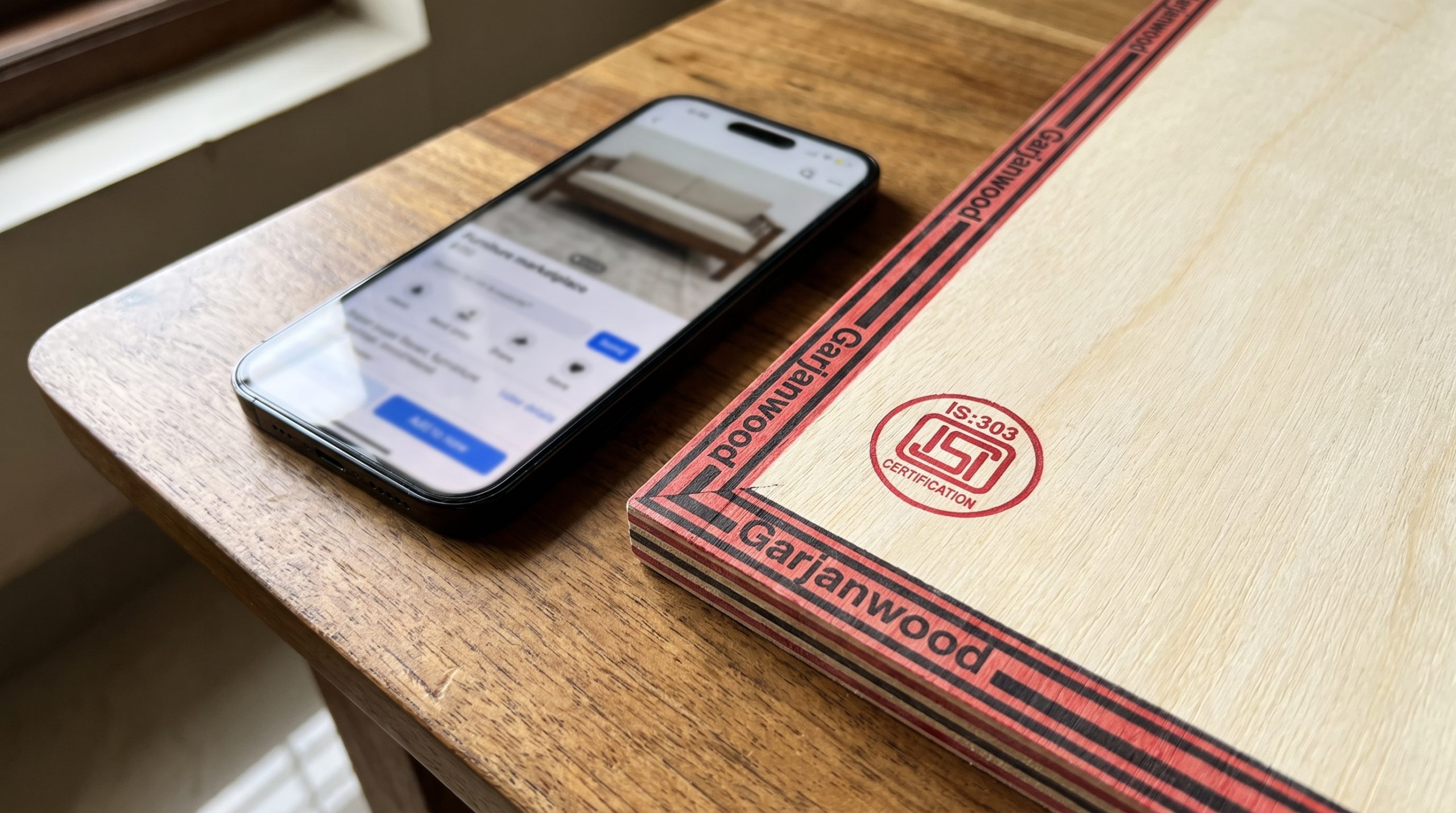
Both versions of this scam, the online listing and the advance-payment contractor, succeed for the same underlying reason: they ask the buyer to trust before they can verify. The fix is not complicated. Insist on seeing the certification stamp in person, split material payments from labor payments, get everything in writing, and treat urgency language as a warning sign rather than a reason to move faster. Genuine Garjanwood plywood carries the same visible IS:303 stamp, the same red-and-black striped edge band, and the same traceable dealer network whether you buy it in a shop in Biratnagar or through a verified online listing. If any of those things are missing, or if payment is expected before any of them can be confirmed, that is the moment to stop and check, not the moment to hurry.