


Introduction
Most guides about “spotting fake plywood” ask buyers to do things that are simply not practical at the moment of purchase, cut into a sheet, send a sample for lab testing, or memorize dozens of technical grading details. None of that helps someone standing at a dealer’s counter with a delivery truck waiting. This guide covers three checks that actually work in the field, in under a minute, without any tools beyond what most people already carry or can borrow on the spot: the weight test, the core-swap check, and how to tell a real digital certification code from a copied one.
Check One: The 30-Second Weight Test
Why Weight Matters
Plywood density is directly tied to the quality of the wood veneers and the glue bonding used between layers. Genuine BWP-grade plywood, built with proper resin bonding and full-thickness veneer layers, is measurably heavier per square foot than a substandard sheet of the same advertised thickness, which often uses thinner veneers padded out with low-density core material or gaps filled with excess glue rather than wood.
This difference is not subtle. A buyer does not need a lab to notice it, just a way to compare weight against a known reference.
How to Do It
- Know the reference weight. Ask the dealer, or check the manufacturer’s published specification, for the standard weight range of the specific thickness you are buying (for example, a 19mm BWP sheet of a given size has a known approximate weight range). Genuine Garjanwood specifications are available through authorized dealers.
- Use a simple hanging or luggage scale. These are inexpensive and widely available, and many dealers keep one on hand specifically because buyers ask for this check.
- Weigh the actual sheet being purchased, not a display sample. This matters because some sellers keep one high-quality “show” sheet at the counter while delivering a different batch.
- Compare against the reference range. A sheet that comes in noticeably lighter than the expected range for its thickness is a strong signal of either a lower grade being mislabeled or a core-swap issue, covered next.
What This Test Does Not Replace
The weight test is fast and effective, but it is a screening tool, not a full certification check. It should be combined with checking the IS:303 stamp and buying from a dealer whose stock is traceable to an authorized source.
Check Two: The Core-Swap Trick
What It Is
This is one of the more deceptive practices in the plywood trade because the sheet can look completely genuine from the outside. A dishonest supplier bonds a real, high-quality face veneer, sometimes even a legitimately branded one, onto a core made of cheaper, lower-density wood or off-cuts glued together with less resin than the grade requires. From the surface, the grain pattern and finish look correct. The problem is hidden inside the layers, which is exactly where most buyers never look.
Why It’s Hard to Catch Visually
The entire point of veneer bonding is that the visible face is a thin, high-quality layer. A core-swapped sheet is specifically designed to pass a glance-and-touch inspection at the counter, which is why this practice persists even among buyers who know to “check the surface.”
How to Check the Edge, Not Just the Face
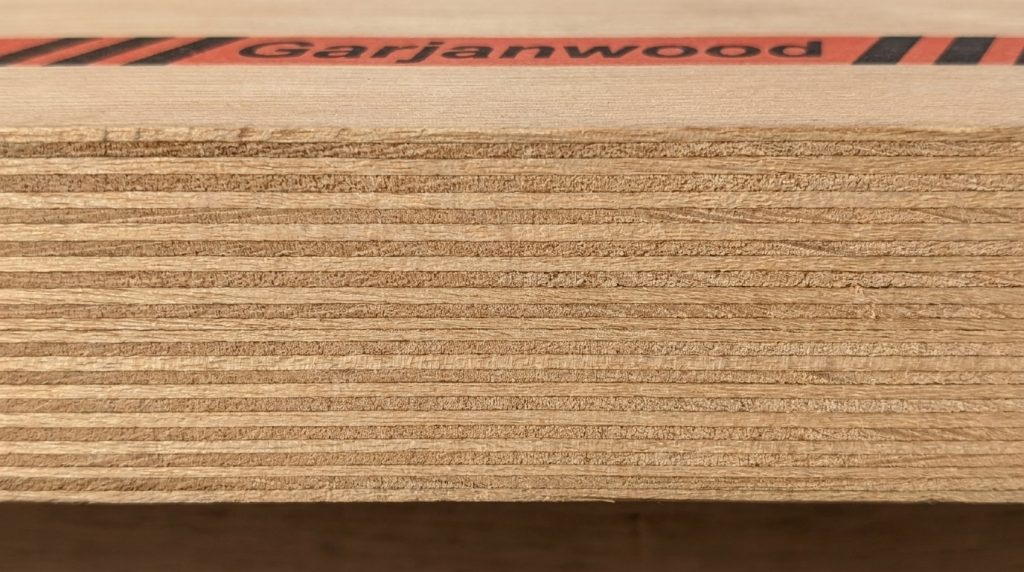
The edge of the sheet is the one place where the internal layers are visible without cutting anything. A genuine, properly bonded sheet shows consistent, evenly spaced veneer layers running the full thickness, with no visible gaps, no crumbling material, and uniform color and density from one layer to the next. A core-swapped sheet often shows one of the following at the edge:
- Uneven layer thickness, with some layers noticeably thinner than others
- Visible gaps or voids between layers
- A sudden change in wood color or texture partway through the thickness, indicating a different (and usually lower) grade of wood was used for the inner core
- Rougher, less uniform texture in the inner layers compared to the smooth outer veneer
Combine With the Weight Test
A core-swapped sheet will almost always fail the weight test too, because the cheaper core material is less dense. Checking both the edge appearance and the weight together catches the vast majority of core-swap attempts, since a supplier would need to fake both the internal density and the internal color consistency, which is far harder than faking either one alone.
Check Three: Fake QR Codes and Digital Verification Copies
Why This Scam Is New
As certification technology has moved toward QR codes and digital verification systems that link a sheet to an online authenticity check, counterfeiters have adapted quickly. Instead of trying to replicate a physical stamp convincingly, which is genuinely difficult to do well, some now simply print a QR code on an unbranded sheet that visually resembles a legitimate one, or worse, copy an actual QR code image from a genuine product photo found online and print it onto counterfeit material.
What a Copied Code Looks Like in Practice
A printed-and-copied QR code will scan, because the code itself is just an image being duplicated, but it will not lead anywhere useful, or it may redirect to a generic page rather than a specific, unique product verification result tied to that individual sheet or batch.
How to Tell the Difference
- A genuine digital verification code should return sheet-specific or batch-specific information, not just a generic “this brand is authentic” landing page. If scanning the code only shows general brand marketing with no specific product or batch reference, treat that as a warning sign.
- Check the code’s print quality against the rest of the sheet’s markings. A code that looks noticeably lower resolution, smudged, or printed at a different angle than the surrounding certification stamp may have been added separately from the original manufacturing process.
- When in doubt, verify through the official channel directly, not just by scanning. Contacting an authorized dealer or the brand directly to confirm a batch number is more reliable than trusting any single scan result, especially for a large or high-value order.
Quick Decision Box: Which Check to Use When
| Situation | Best Check to Use First |
|---|---|
| Buying a single sheet at a dealer counter | Weight test, then edge inspection |
| Buying in bulk for a full renovation | Edge inspection on a sample from the actual delivery batch, plus weight spot-checks |
| Sheet has a QR or digital verification code | Scan and confirm batch-specific result, then edge inspection |
| Buying through an online listing before delivery | Request edge and stamp photos of the actual batch, confirm dealer identity separately |
| Any situation where the price is notably below market rate | Use all three checks before paying |
Nepal Climate Note
Core-swapped and low-density plywood is not just a financial risk in Nepal’s climate, it is a durability risk specific to the region. The lower-density core material used in these scams tends to absorb monsoon humidity faster and swell or delaminate sooner than a properly bonded BWP-grade sheet, particularly in the Terai. A sheet that passes the counter inspection but fails the weight and edge checks may look fine on installation day and start showing problems within the first monsoon season, well after any return or complaint window has closed.
The Bottom Line
None of these three checks require special training or expensive equipment. A simple scale, a close look at the sheet’s edge, and a habit of verifying digital codes through the official channel rather than trusting a scan alone will catch the overwhelming majority of substandard or counterfeit plywood before it enters a home. Genuine Garjanwood sheets are built to pass all three checks without hesitation: consistent weight for their thickness, uniform bonded layers visible at the edge, and certification, whether physical stamp or digital code, that traces back to a specific, verifiable batch. Buyers who take thirty seconds to check before paying protect not just their money, but the long-term durability of everything built from that plywood.