


Every contractor in Nepal has asked the same question at the end of a pour: can this sheet go up one more time? The answer decides whether your formwork budget stays under control or quietly doubles. This guide to shuttering plywood Nepal contractors can actually use explains what drives reuse counts, which grade suits which job, and how a few small habits on site add pours to every sheet.
What Is Shuttering Plywood and Why Do Nepali Contractors Use It?
Shuttering plywood is the sheet material that forms the mould for wet concrete. It holds the shape of slabs, beams, columns and walls until the concrete gains enough strength to stand on its own. Compared with loose timber planks, plywood gives a flatter, smoother concrete face, fewer joints, and faster assembly because one 8 ft by 4 ft sheet covers a large area in a single fix.
For residential builders in Biratnagar, Itahari, Dharan and Kathmandu, plywood also fits the way sites actually work. Crews are small, schedules are tight, and the same sheets often move from one floor to the next. A sheet that survives several pours is not a luxury; it is the difference between a profitable job and a break-even one.
The Real Reuse Question: Why the Number Keeps Changing
Ask five contractors how many times a sheet can be reused and you will hear five answers. Both sides are usually right, because reuse depends on conditions, not just on the board. Commonly quoted planning figures are a handful of pours for ordinary boiling water proof plywood and ten or more for coated or film faced shuttering grades handled with care. Treat these as rough guides and confirm with your supplier, because real results vary a lot.
Five factors move that number up or down:
- Bond quality: The glue line decides whether layers stay locked after repeated wetting and drying.
- Surface protection: A coated or film-faced surface resists cement slurry and releases cleanly.
- Edge sealing: Raw edges absorb water first, and swollen edges are where sheets fail first.
- Handling: Dragging sheets over rebar and hammering nails near edges cuts life quickly.
- Release agent and cleaning: Clean, lightly oiled faces peel away from concrete without tearing the veneer.
Grades Compared: Which Plywood for Which Formwork Job
You do not need premium shuttering sheets for every job. Matching the grade to the work is where real savings come from. Use the table below as a starting point.
| Formwork job | Reuse demand | Suggested approach |
|---|---|---|
| Slab edges, small beams, column boxes on a single house | Low to medium | Boiling water proof (BWP) grade plywood with sealed edges |
| Repeated floor decks on a multi storey build | High | Coated or film faced shuttering grade |
| Retaining walls and exposed concrete faces | Medium, finish matters | Smooth faced sheets with fresh release agent each pour |
| One off decorative or curved forms | Low | Thinner flexible sheets, accept single use |
When you ask a dealer for sheets, state the job and the expected number of pours. A good supplier will recommend a grade instead of simply quoting the cheapest option.

Five Habits That Add Reuses to Every Sheet
Small habits on site cost nothing and consistently add pours.
- Seal every cut edge. After cutting, brush paint, bitumen or an edge sealer on raw edges before the sheet goes anywhere near water.
- Apply release agent before each pour. Use a thin, even coat, not a puddle, and wipe excess so it does not stain the concrete.
- Strip gently. Use wooden wedges, never steel bars, to separate formwork from cured concrete.
- Clean the same day. Scrape slurry off while it is soft, because dried cement works its way into the veneer.
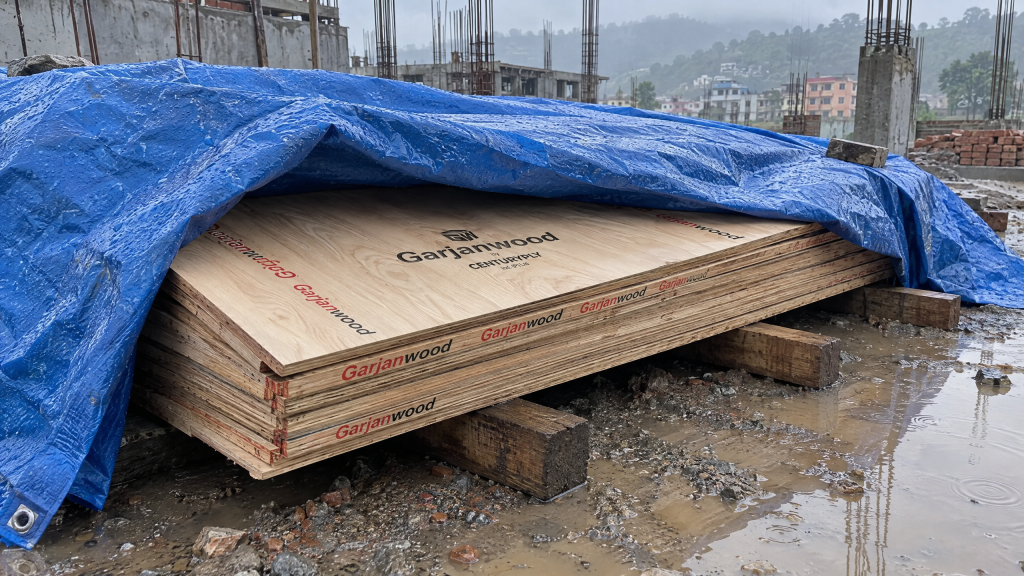
- Stack flat and off the ground. Store sheets on timber battens, cover them, and keep them away from standing water.
Number each sheet in marker and record its pour count. After a few jobs, you will know exactly what your own crew and conditions deliver, which is worth more than any generic figure.
Monsoon and Terai Humidity: A Site Climate Note
Nepal’s monsoon turns every open site into a wet environment for months. In the Terai, high humidity and standing water make edge swelling the main enemy. Sheets left uncovered between pours soak up moisture and then dry unevenly, which warps the face and weakens the bond. In the hills and Kathmandu Valley, the swings between cold nights and sunny days add expansion stress.
Practical steps for wet months:
- Cover stored sheets with tarpaulin and keep air moving underneath.
- Avoid leaving formwork standing in rain for days before a pour.
- Re-seal edges at the start of the monsoon, not after the first swelling appears.
- Do not force dry wet sheets in hard direct sun, which causes cracking and curling.
Think Cost Per Pour, Not Cost Per Sheet
A cheaper sheet that gives four pours can cost more than a better sheet that gives twelve. The useful number is cost per pour: the sheet cost, plus handling and replacement labour, divided by the pours you realistically get. Add the cost of finishing defects too. A rough concrete face means extra plastering, and that labour is part of your formwork cost even though it never appears on the plywood invoice.
Run this calculation once on your next job. Keep the sheet price, note the actual pours, and compare. Most contractors are surprised by how quickly the premium grade pays for itself on repeated floors, and equally surprised that it is wasted on a one-time boundary wall.
Common Mistakes That Kill Formwork Sheets Early
- Cutting sheets on site and leaving the edges bare.
- Nailing within a few centimetres of an edge, which splits the layers.
- Using the same sheet for the roughest and finest jobs.
- Skipping release agent to save time on a tight day.
- Stacking wet sheets flat under other materials.
Quick Decision Box
Choose ordinary BWP plywood if: the job is a single house, you will reuse sheets only a few times, and you will seal every edge. Choose coated or film-faced shuttering grade if: you are casting repeated floors and want a clean concrete face. Always: seal edges, use release agent, strip gently, and store flat and covered.
Build on a Board You Can Trust
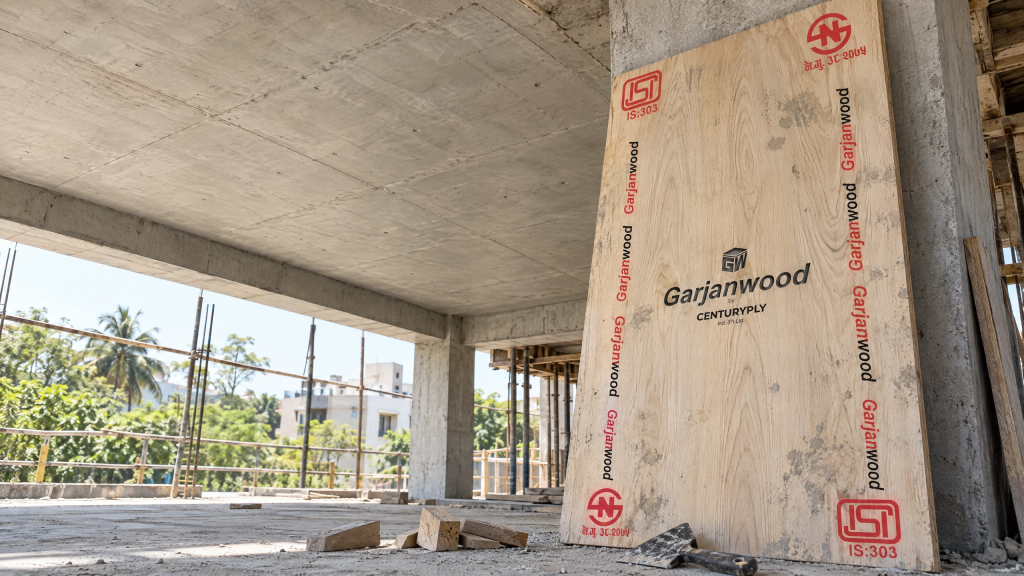
Formwork is only as reliable as the plywood behind it. Garjanwood by CenturyPly is manufactured at Century Ply Industries in Sunsari and is IS:303 certified, so you start with a recognised standard for bond and board quality. For light residential formwork, ask your Biratnagar or Kathmandu dealer which Garjanwood grade fits your pour count, and for repeated heavy use, ask about the right coated option. Tell them the job, and choose the board that makes every pour cheaper.