


Nepal’s Rural Tourism Visit Year Is Creating a Real Construction Wave
Following the success of Bandipur Visit Year 2025, 2026 has been declared Rural Tourism Visit Year, and the building activity behind that declaration is already visible on the ground. The Bandipur-Keshavtar Homestay Circuit, a roughly 75-kilometer route connecting the historic town of Bandipur with Vyas Municipality, now links 14 homestays across more than 20 villages, developed jointly by Vyas Municipality and Bandipur Rural Municipality to promote tourism built on local products, traditions, and environment.
This isn’t a one-season trend. It sits inside a broader Visit Nepal 2028 strategy that’s actively diversifying tourism away from trekking-only destinations and toward community and cultural experiences, with more circuits like this one likely to follow as other municipalities look to replicate the model. For homestay owners converting existing houses, rural municipality contractors managing circuit infrastructure, and guesthouse builders working village by village, that means a genuine, multi-year construction cycle, not a short-lived spike.

What Makes Homestay Construction Different From Standard Home Building
Building or converting a house for guests is a different job than building one for a family, even though the materials involved often look similar on paper. Guest-facing spaces need to look finished and hold up under constant turnover, not just be livable for the people who already know the house’s quirks. A worn drawer or a sticking door that a homeowner shrugs off becomes a bad review when a paying guest hits it instead.
Many of these projects are also conversions of existing houses rather than clean new builds, which means working around structures that weren’t designed with guest flow or plumbing loads in mind. And because a lot of circuit villages sit some distance from major supply routes, getting the plywood grade right the first time matters more here than it would for a Kathmandu renovation where a supplier is a short drive away.
Room-by-Room Plywood Guide for Homestay Builds
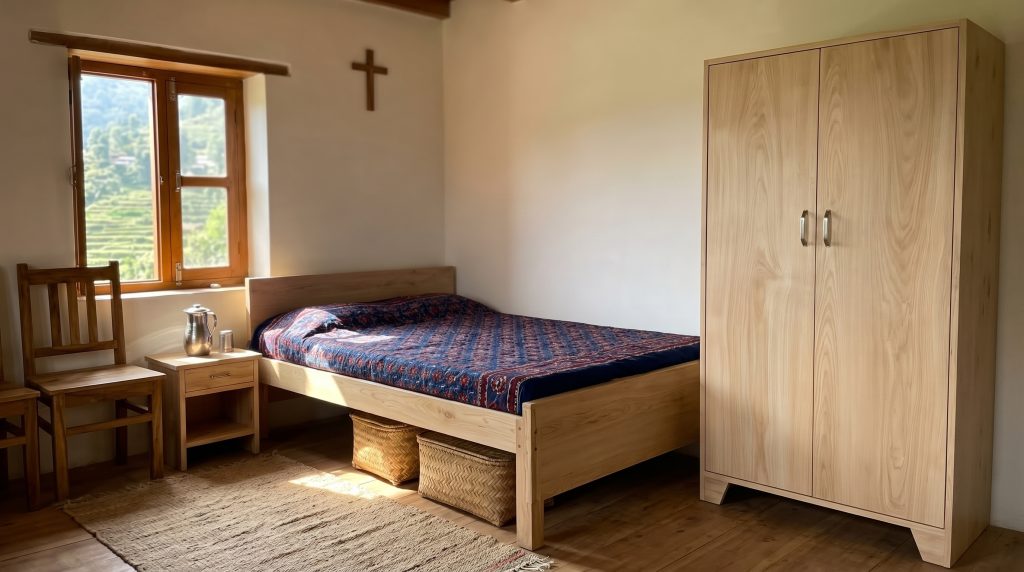
- Guest bedrooms: BWP-grade panels for wardrobes and bed frames that can hold up to repeated use by different guests, not just the wear pattern of one family
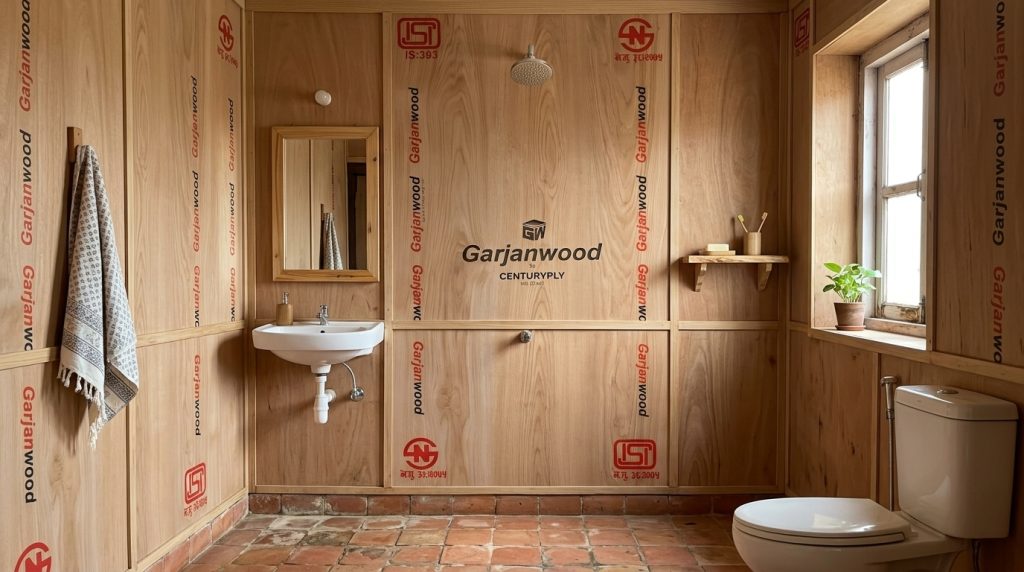
- Shared bathrooms: moisture-resistant grade is non-negotiable here, since guest bathrooms see far more water exposure through constant turnover than a private home bathroom ever does
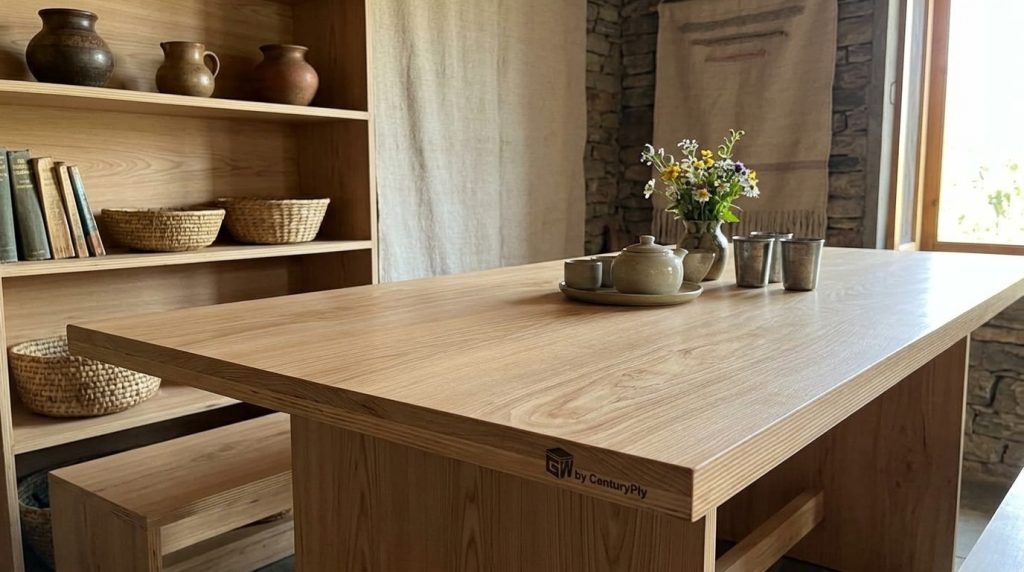
- Common dining and living areas: natural-finish panels work best for a warmer, more authentic guest experience, which reinforces the cultural-tourism positioning these circuits are built around
- Kitchen: a heavy-use grade for cabinetry that can survive daily, near-commercial cooking rather than the occasional use a private kitchen sees
Budgeting and Timelines for Circuit-Based Homestay Projects
Material delivery needs to be planned around circuit road access, since some villages have seasonal or limited-vehicle access that can delay a project if it isn’t accounted for early. Where possible, it’s worth coordinating bulk plywood orders across multiple homestays on the same circuit, since that shared delivery can meaningfully reduce the per-unit transport cost compared to each owner ordering separately. It’s also worth resisting the temptation to save on grade upfront: guest-facing furniture that fails early doesn’t just cost money to replace, it damages reviews and repeat bookings in a business that runs largely on word of mouth and circuit reputation.
Questions Homestay Owners Should Ask Before Choosing a Supplier
Before committing to a supplier, it’s worth confirming a few things directly rather than assuming. Ask plainly whether the plywood is genuinely BWP-grade or whether a lower moisture-resistance grade is being sold as equivalent. Confirm the supplier can actually deliver to rural or circuit-connected addresses, not just Kathmandu or Biratnagar city limits, since delivery reach varies more than people expect once you’re outside major towns. And check that the panel carries IS:303 certification, since that’s the clearest way to verify quality claims rather than take them on trust.
Comparison: Plywood Needs by Homestay Build Type
| Build Type | Primary Plywood Need | Recommended Grade | Key Consideration |
|---|---|---|---|
| New homestay construction | Full furniture and fixtures | BWP throughout | Budget for complete guest-room sets upfront |
| Existing house conversion | Retrofit furniture, bathroom upgrades | BWP for wet areas, standard for dry storage | Match new pieces to existing structural constraints |
| Guesthouse extension/expansion | Additional guest rooms, shared common area | BWP throughout | Coordinate finish consistency with existing rooms |
Quick Decision Box
If you’re converting a family home into a homestay, prioritize BWP-grade plywood for the bathroom and any guest bedroom furniture first, since that’s where failure shows fastest and costs the most in reviews. If you’re building new on a circuit like Bandipur-Keshavtar, order in bulk together with neighboring homestays on the same route to reduce transport cost. And if you’re working on a tight budget, cut back on back-of-house storage before you cut back on guest-facing furniture grade.
Nepal Climate Note
Homestay circuits often sit at hill elevations with sharp humidity and temperature swings between seasons, and guest bathrooms see far more water exposure than a typical family bathroom due to constant turnover. BWP-grade Garjanwood is built to hold up under exactly this kind of repeated, high-moisture, high-use cycle, which is a heavier load than the lighter use a private home sees over the same period.
Garjanwood / IS:303 Brand Close
For homestay and lodge builders working within Nepal’s Rural Tourism Visit Year circuits, Garjanwood’s IS:303-certified, BWP-grade panels, manufactured at the Sunsari factory, are built for the repeated guest turnover and variable rural transport conditions that standard home construction never has to plan around.