

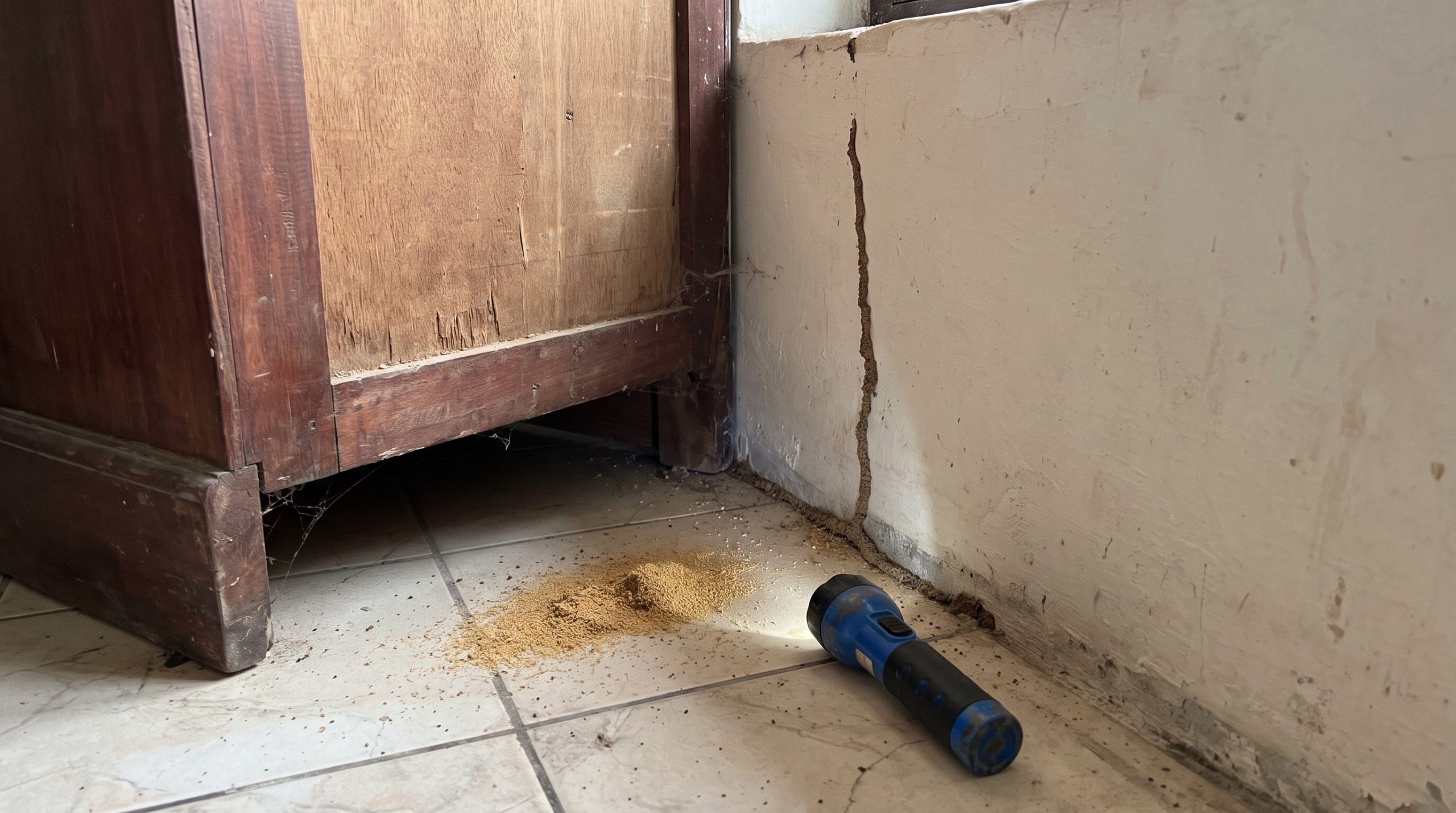
Many buyers think the job of pest protection ends at the shop. They choose a good board, the carpenter builds the furniture, and everyone assumes it is safe for life. In reality, termites and borers are a long game. They do not care how new your wardrobe looks. They care about moisture, hidden gaps, and easy paths from soil to wood. If you want to protect plywood furniture from termites, the work continues after installation: inspecting, keeping conditions dry, and acting quickly when you see early signs. This guide shows you how, in plain language, with steps any family can follow.
Why Termites and Borers Are a Real Risk in Nepal
Nepal’s warm, humid Terai and mid-hill regions are ideal for termites. Subterranean termites live in soil and travel through narrow mud tubes to reach wood, while drywood termites can live directly inside timber and furniture. Wood borers are small beetles whose larvae tunnel inside timber, leaving tiny holes and fine powder. Treated plywood resists these pests better than untreated boards, but no treatment is magic. A leaking pipe, a damp wall or an unsealed cut can create the exact conditions pests look for.
The key thing to understand is that pests follow moisture and shelter. Dry, well-ventilated furniture on a clean floor is a poor target. Damp, closed, dark furniture against an old wall is a perfect one. So prevention is mostly about removing what pests want.
Early Warning Signs You Should Never Ignore
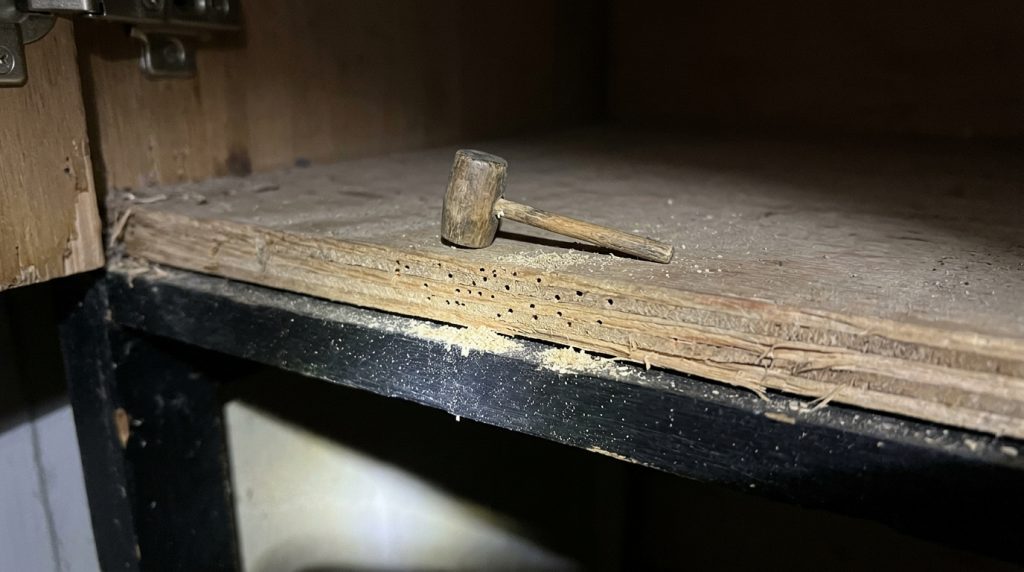
Termites work quietly, often for months before damage shows. Extension services at universities describe the same clues again and again, as in the Mississippi State University guide to signs of termite infestation and the Utah State University fact sheet on subterranean termites. Look for:
- Mud tubes: thin lines of dried soil running along walls, floors or the back of furniture
- Frass: tiny pellets or powder that looks like sawdust or coffee grounds, collecting under or near furniture
- Hollow sound: a dull, papery sound when you tap a panel with your knuckle
- Small pinholes: tiny round holes in wood surfaces, sometimes with fine powder beneath
- Bubbling or peeling paint and laminate: especially near the floor, with no obvious water source
- Flying insects or discarded wings: often found near windows or lights after the first rains
- Doors and drawers that suddenly stick: caused by hidden damp and wood damage
Seeing one sign does not always prove an infestation, but seeing two or three together is a strong warning. Act at once.
Where to Inspect Your Furniture
A quick check every few months, and again before and after the monsoon, is enough for most homes. Do not just look at the front. Pests usually start in hidden places.
| Where to look | What to check |
|---|---|
| Back and bottom of wardrobes | Mud tubes, dust piles, soft or crumbling panels |
| Behind and under beds | Floor contact points, frass, damp patches |
| Kitchen and bathroom cabinets | Leaks, swollen panels, bubbling laminate |
| Wall contact areas | Cracks in plaster, mud lines running up the wall |
| Drawers and shelves | Small holes, fine powder, tapped hollow sound |
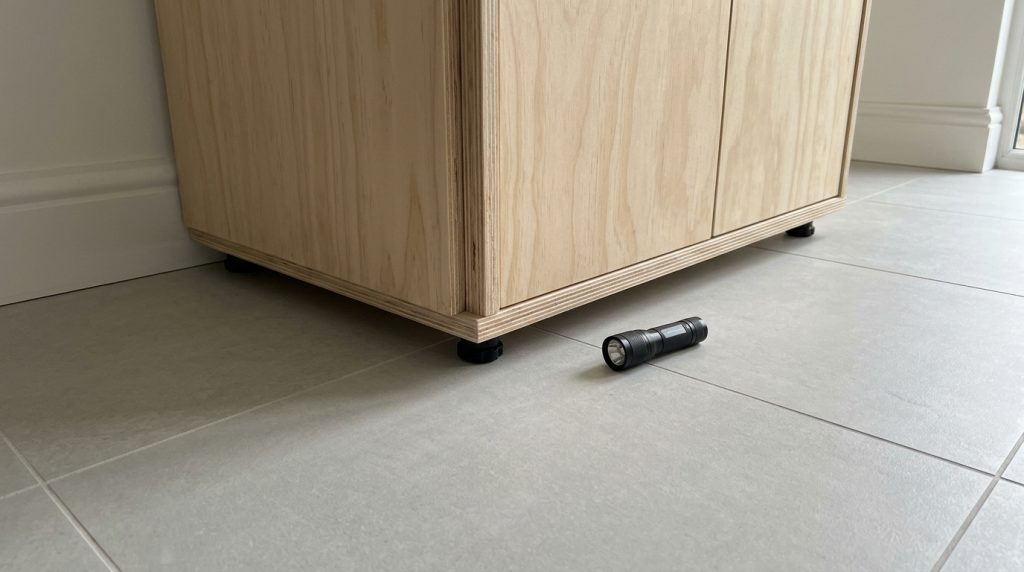
Use a torch to look into dark corners and gently tap panels. A thin screwdriver pressed lightly on suspect wood will show if it is soft underneath. Do not poke hard, as you only want to test, not damage.
How to Protect Plywood Furniture from Termites: Daily and Seasonal Habits
Most of the protection comes from simple habits, not chemicals.
Keep furniture dry. This is the single biggest step. Fix leaks quickly, keep furniture off wet floors, and leave a gap between furniture and walls. Our guide to protecting plywood furniture from moisture covers this in detail.
Seal edges and cut outs. Raw edges and pipe holes give pests an easy way in and let moisture pool. Follow our steps to seal plywood edges.
Keep the floor and wall clear. Do not stack cardboard, old newspapers or wooden scraps behind furniture. These feed termites and create a bridge to your furniture.
Raise furniture slightly. A small plinth or legs let you see under the unit and keep the base away from soil moisture.
Check any new wood you bring in. Second hand furniture, firewood and wooden boxes can carry pests into the house. Inspect before bringing them near your plywood.
Ventilate. Open wardrobes now and then, and keep air moving in storerooms and bedrooms that stay closed for long periods.
What to Do If You Find Signs of Infestation
Stay calm, but move fast.
- Isolate the area. Move any items you can away from the affected furniture so the pests cannot spread easily.
- Take photos and note the location. This helps a pest control expert judge the problem.
- Call a licensed pest control service. Termite colonies usually live outside the furniture, in soil or walls, so treating the piece alone rarely solves the problem. Professionals can treat the soil and the building structure as well.
- Do not use kerosene, diesel or petrol on furniture. These are common home remedies, but they are a fire hazard, they damage the finish, and they can harm your family’s health. They also do not remove the colony.
- Repair after treatment, not before. Once the pests are gone, replace badly damaged panels and re seal the area.
Because treatment usually involves chemicals, keep children and pets away from treated areas until the specialist says it is safe.
When to Replace Rather Than Repair
If a panel sounds hollow over a large area, crumbles when pressed, or shows deep tunnels, repair is not reliable. Replace it. Patching a weak panel with filler may hide the damage but will not restore strength, and the shelf or door may fail under load. Small, localized damage on a non structural part, such as a back panel, may be repaired after professional treatment. When in doubt, ask your carpenter and pest control provider together.
Quick Decision Box
| If you notice… | Do this |
|---|---|
| Mud tubes on or near furniture | Call a licensed pest control provider at once |
| Fine powder under a shelf | Check for holes, tap panels, take photos, then call for advice |
| Damp, musty cupboard with no pests yet | Dry it, fix the source, seal edges, add a wall gap |
| Hollow, crumbling panel | Replace the panel after treatment |
A Note on Nepal’s Climate
In the Terai, including Biratnagar, Jhapa and Morang, heat and monsoon humidity keep termite activity high for much of the year, so quarterly checks are wise, especially for ground floor rooms. In the hills, older buildings with damp walls and poor drainage can invite pests even in cooler weather. Kathmandu Valley homes with old brick walls or mud floors in basements should also be watched. Wherever you live, the pattern is the same: dry, ventilated, regularly inspected furniture stays safe longer. For more on matching grade to conditions, see our guide on borer and termite proof plywood.
Frequently Asked Questions
Is treated plywood completely termite proof? Treated plywood resists attack much better than untreated boards, but long lasting damp conditions can still invite problems. Treat it as one layer of protection, not the only one.
Can I spray something myself? Surface sprays rarely reach the nest. For a real infestation, use a licensed professional.
How often should I inspect furniture? Every three to four months, and always before and after the monsoon.
Start with a Trusted Board: Garjanwood by CenturyPly
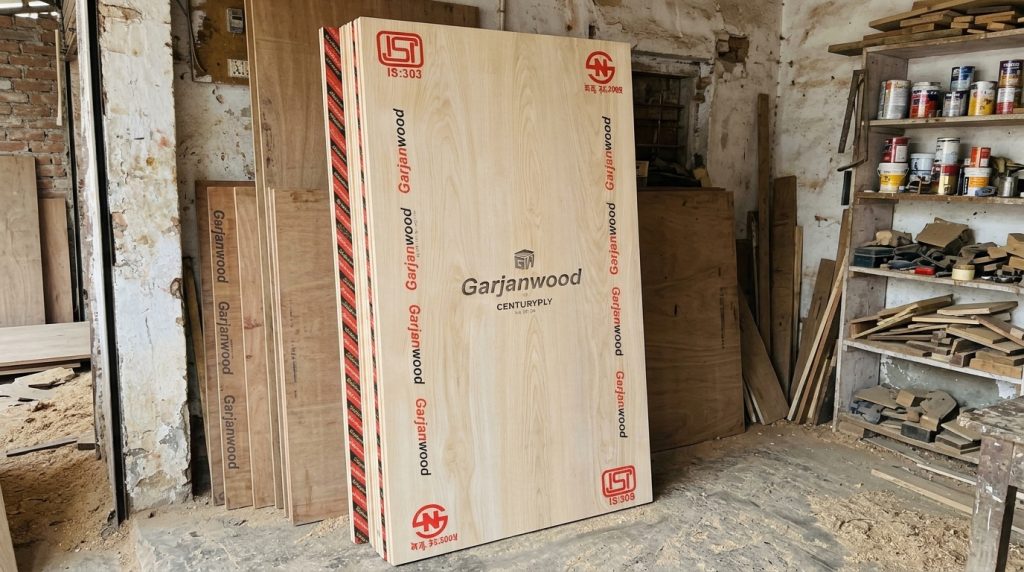
Good protection begins with a well-made board and ends with careful ownership. Garjanwood by CenturyPly is manufactured at Century Ply Industries in Barju, Sunsari, and is IS:303 certified. Check the red IS:303 stamp at each corner, the pale cream Garjan grain and the red and black edge band with the Garjanwood name before you buy. Then follow the habits above and your furniture will be far harder for pests to trouble. Read more at centuryplynepal.com.