

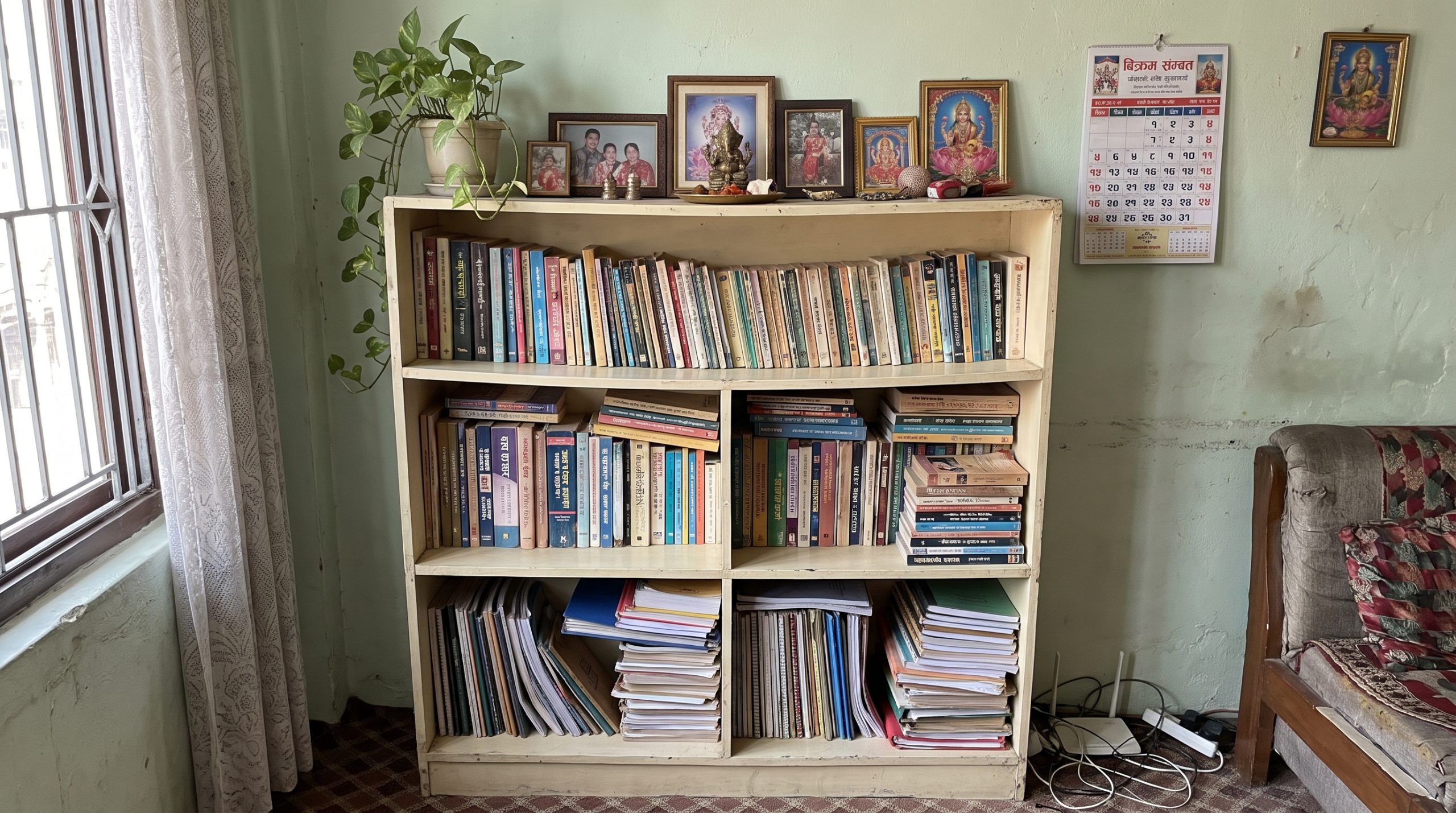
Plywood is strong, but it is not magic. A bookshelf that holds a few light items for years may sag in months once it is packed with heavy encyclopedias. A bed that feels solid can creak and loosen if the frame was never meant to take extra weight. And the same wardrobe that lasts twenty years in one corner of a house may fail in five years in another, simply because of where it stands. Understanding plywood furniture load limits and choosing the right place for each piece is one of the simplest ways to protect your investment. This guide explains both in plain language.
Why Load and Placement Matter
Furniture usually fails in two ways. It either bends or breaks under too much weight, or it slowly degrades because of where it sits. Overloading causes shelves to sag, screws to pull out and joints to crack. Poor placement exposes the furniture to damp walls, sunlight, heat and floor moisture. The two problems also feed each other, because a panel weakened by dampness carries less load than a dry one. If you manage both, you prevent most of the damage before it begins.
Understanding Plywood Furniture Load Limits
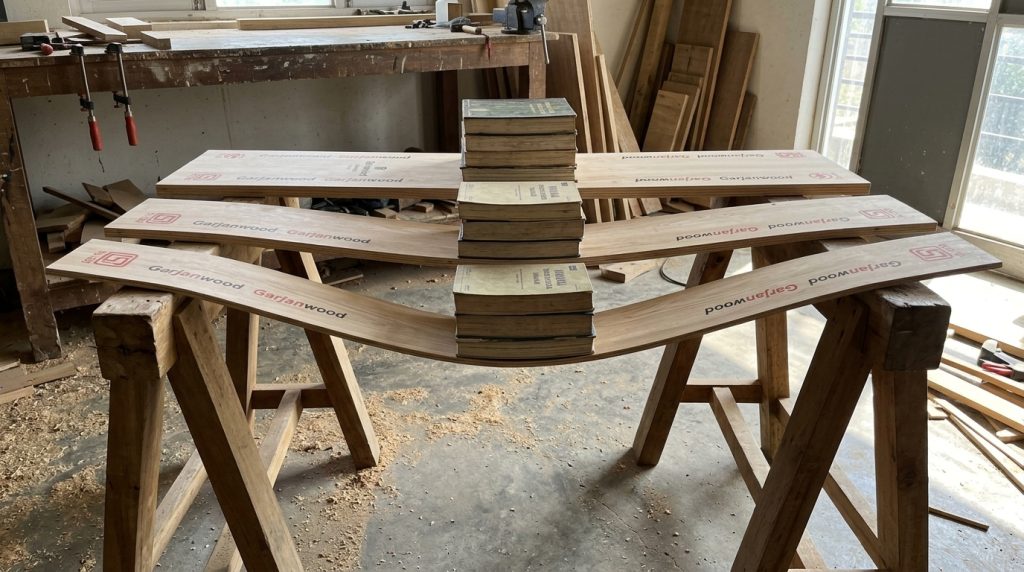
Three things decide how much weight a plywood shelf or panel can carry: its thickness, the distance between supports (the span), and how the weight is spread. A thicker board is stronger, a shorter span is stronger, and weight spread evenly is safer than a heavy point load.
Think of a shelf like a bridge. The longer the gap between supports, the more the middle bends under the same weight. Doubling a span increases the bend by far more than double, which is why long shelves sag so quickly. Adding a vertical divider in the middle is often better than switching to a much thicker board.
Rough Guide for Shelf Spans
The table below gives common rules of thumb used by carpenters for plywood shelves carrying heavy loads like books or kitchen storage. They are approximate, because board quality, finish and the actual load all matter. Lighter loads allow longer spans. When in doubt, ask your carpenter.
| Plywood thickness | Typical use | Rough maximum span for heavy loads |
|---|---|---|
| 12 mm | Back panels, light shelves, drawer bottoms | About 40 to 45 cm |
| 18 mm | Wardrobe carcasses, general shelves, kitchen units | About 60 to 75 cm |
| 25 mm | Heavy shelves, counters, bed platforms | About 90 cm |
If you need a wider shelf than these numbers allow, add a middle support or a front stiffening strip. Our guide to fixing sagging shelves explains how.
Load Guide by Furniture Type
Bookshelves and storage shelves. Books are heavier than most people think. A single metre of packed books can weigh several kilograms, and a full shelf adds up quickly. Keep spans short, place the heaviest books on the lowest shelves, and avoid mixing very heavy and very light items in a way that stresses one section.
Wardrobes. Clothes are light, but stacked quilts, trunks and suitcases on the top shelf add weight. Put heavy items low, near the vertical dividers, and keep the hanging rail span reasonable. A rail longer than about a metre benefits from a middle support, especially if you hang heavy winter coats.
Drawers. Overloaded drawers are the number one reason runners fail, and drawer bottoms bow. Check the runner rating, avoid filling a drawer to the brim with heavy items such as tools or utensils, and use an 18 mm or stronger base for heavy storage drawers.
Beds. A bed must take the load of people moving, jumping and sitting on the edge, not just lying still. Use a strong frame with proper support under the middle, not only at the corners, and choose a thicker board for the base. Children jumping on a bed can stress joints far more than adult sleeping weight.
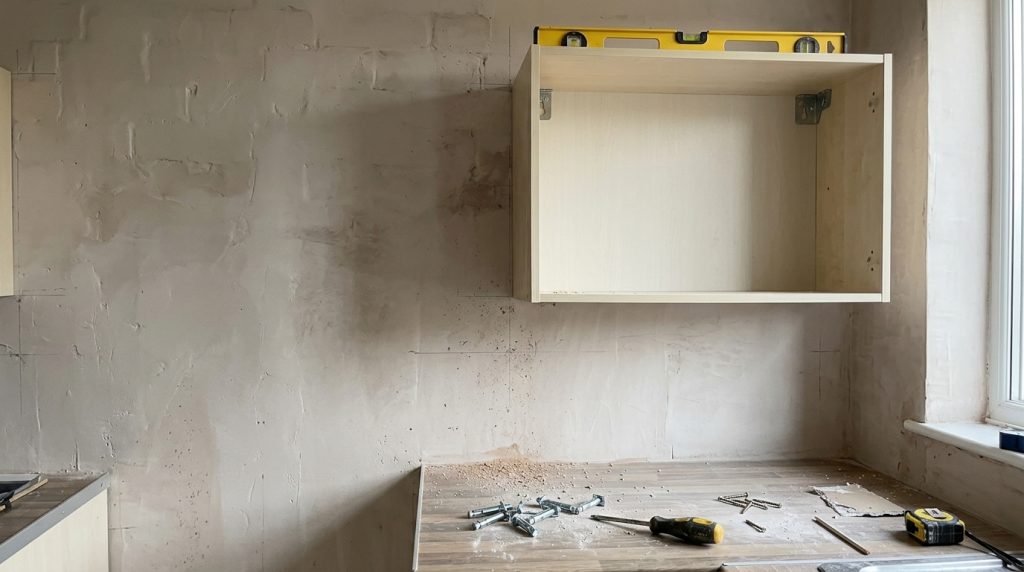
Kitchen wall cabinets. Wall units carry plates, jars and appliances, all hanging from fixings in the wall. The cabinet may be fine while the wall fixing fails first. In brick or concrete walls, use proper wall anchors rated for the load, not small plastic plugs, and avoid putting very heavy items in high cabinets.
Study tables and counters. Tabletops should be at least 18 mm, and 25 mm if they carry monitors, printers or heavy appliances. Add a front rail or support if the span is long.
Where You Place Furniture Matters Too
Where a piece stands decides how long its finish and structure last. Use this checklist when arranging a room.
- Keep a gap from walls. Leave about 25 to 50 mm between furniture and outer or damp walls, so air can circulate. Our guide to protecting plywood furniture from moisture explains why.
- Lift it off the floor. Use legs, pads or a small plinth so floor cleaning and spills do not reach the bottom panel.
- Avoid direct sunlight. Strong sun fades veneers, dries finishes and can make laminate edges curl. Use curtains or move the piece.
- Keep away from heat. Place furniture away from stoves, heaters and hot appliances. Heat peels laminate and dries glue lines.
- Stay clear of leaks. Do not place plywood furniture under roof joints, pipes or windows that leak during rain.
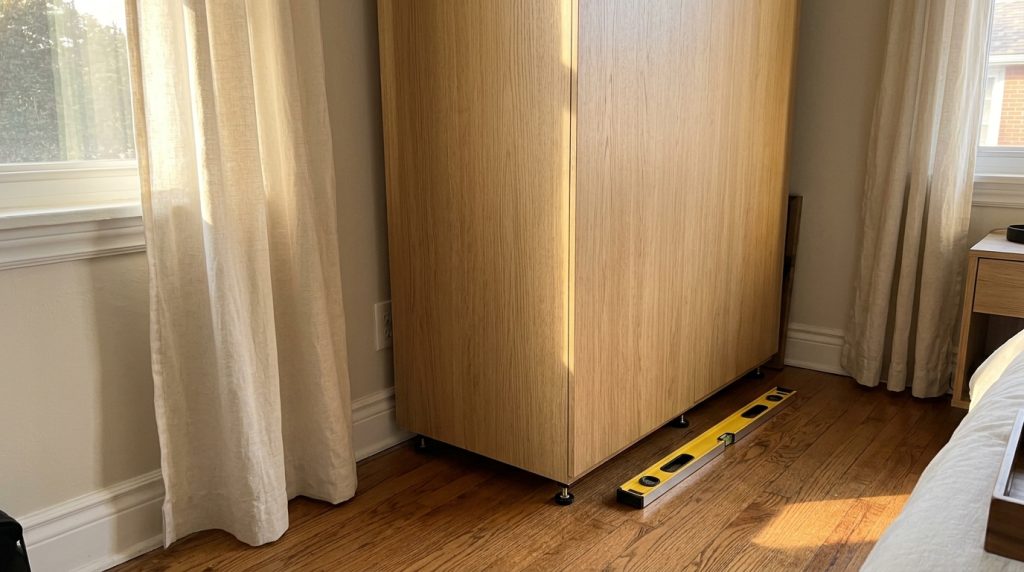
- Level the base. A wobbly unit puts uneven stress on joints. Adjust the feet or use thin packing under the low side.
- Think about floors. On uneven floors, use adjustable legs. On very soft floors, a hard base under the feet spreads the load.
Common Mistakes to Avoid
- Putting very heavy appliances on thin shelves
- Letting children climb or hang on shelves and doors
- Stacking far more weight than the board was built for, especially on top of wardrobes
- Screwing heavy wall units into plaster only, rather than into the solid wall behind
- Ignoring early signs like creaking, slight bowing or doors that no longer align
- Pushing furniture hard against a damp outer wall
Quick Decision Box
| Situation | What to do |
|---|---|
| Long shelf holding books | Add a middle divider or use a thicker board |
| Heavy suitcases on top of wardrobe | Move them low, or use a stronger lid support |
| Wardrobe on an outer wall | Add a gap and check the wall for dampness |
| Wall mounted kitchen unit | Use correct wall anchors and keep heavy items low |
| Drawer feels heavy and sticks | Reduce the load and check runners |
A Note on Nepal’s Climate
In the Terai, humidity can reduce the strength of damp panels, so be generous with spans and supports, and keep furniture off the floor during monsoon months. In the hills and Kathmandu, older walls may be damp or uneven, so check the wall and floor before you settle a heavy unit. In houses built with brick, stone or mud mortar, take extra care with wall fixings. For choosing the right grade for your region, see our guide on monsoon humidity and grade selection.
Frequently Asked Questions
Can plywood hold more weight than MDF or particle board? In general, quality plywood handles screws and bending better than particle board, but the right design and supports matter more than the material name alone.
How do I know if a shelf is overloaded? Look for a visible bow, creaking sounds and cracks near the supports. If you see these, reduce the load and add support.
Is a thicker board always better? A thicker board is stronger, but a shorter span or a middle support is often cheaper and more effective.
Built to Carry Your Life: Garjanwood by CenturyPly
Good design and sensible loading keep furniture strong, but the board you start with sets the ceiling. Garjanwood by CenturyPly is manufactured at Century Ply Industries in Barju, Sunsari, and is IS:303 certified. Look for the pale cream Garjan grain, the diagonal red and black edge band with the Garjanwood name, and the red IS:303 stamps at the corners. Ask your carpenter to choose the right thickness for each part, plan the supports carefully, and your furniture will carry daily life with ease. Find out more at centuryplynepal.com.